Napali Coast Sea Caves: Which Boat Tours Actually Enter Them?
The sea caves are the single most requested feature on the Napali Coast and the most common reason a review goes sour. Here is the honest version: which boats fit inside, what closes the caves, and how to pick a tour that gives you a real shot.
Short answer
Only small rigid-hull rafts reliably enter the Napali Coast sea caves, and no operator guarantees entry. Cave access depends on ground swell, not time of day, and summer months give the best odds. Raft tours from the roster run from $217 to $257.28 per person, and every one sells cave entry as conditions permitting.
The Napali Coast hides its sea caves in the base of cliffs that rise as much as four thousand feet off the water, and getting inside them is the one thing nearly every visitor asks for before booking. It is also the one thing no operator will promise. The gap between those two facts is where most disappointed reviews come from, and this guide exists to close it.
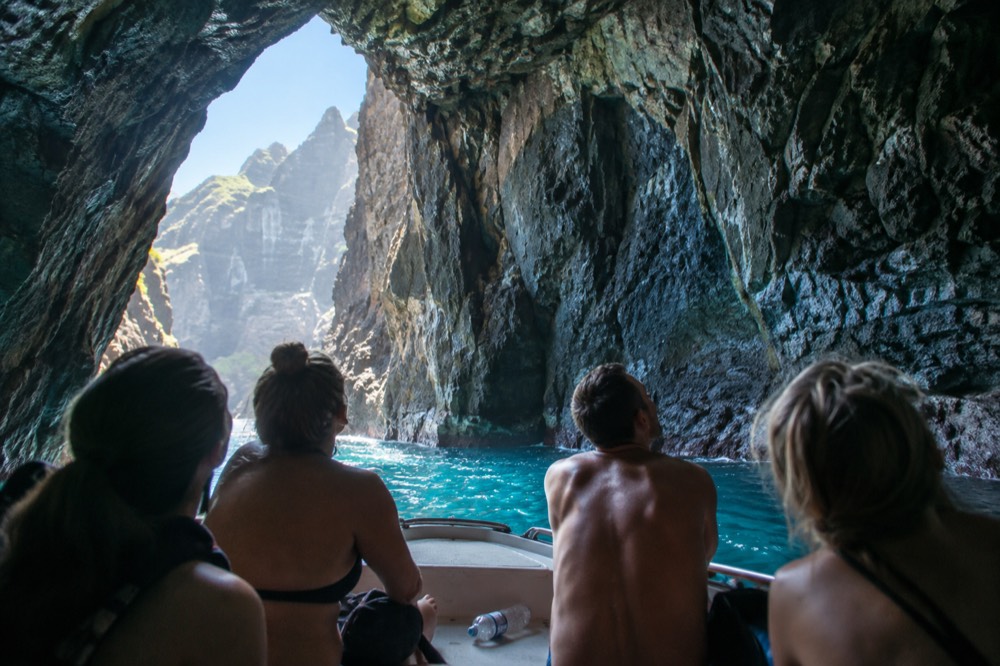
The caves themselves are ancient lava tubes that wave erosion has widened into chambers, some with collapsed ceilings that open into skylights and freshwater cascades that pour straight into the sea. Only small rigid-hull inflatable rafts fit inside them. Large catamarans cannot, and at least one small power catamaran operator claims its vessel can. Entry is always at the captain's discretion, governed by ground swell rather than time of day, and summer gives far better odds than winter. Those are the rules. Everything else on this page is detail.
What Sea Caves Are On The Napali Coast?
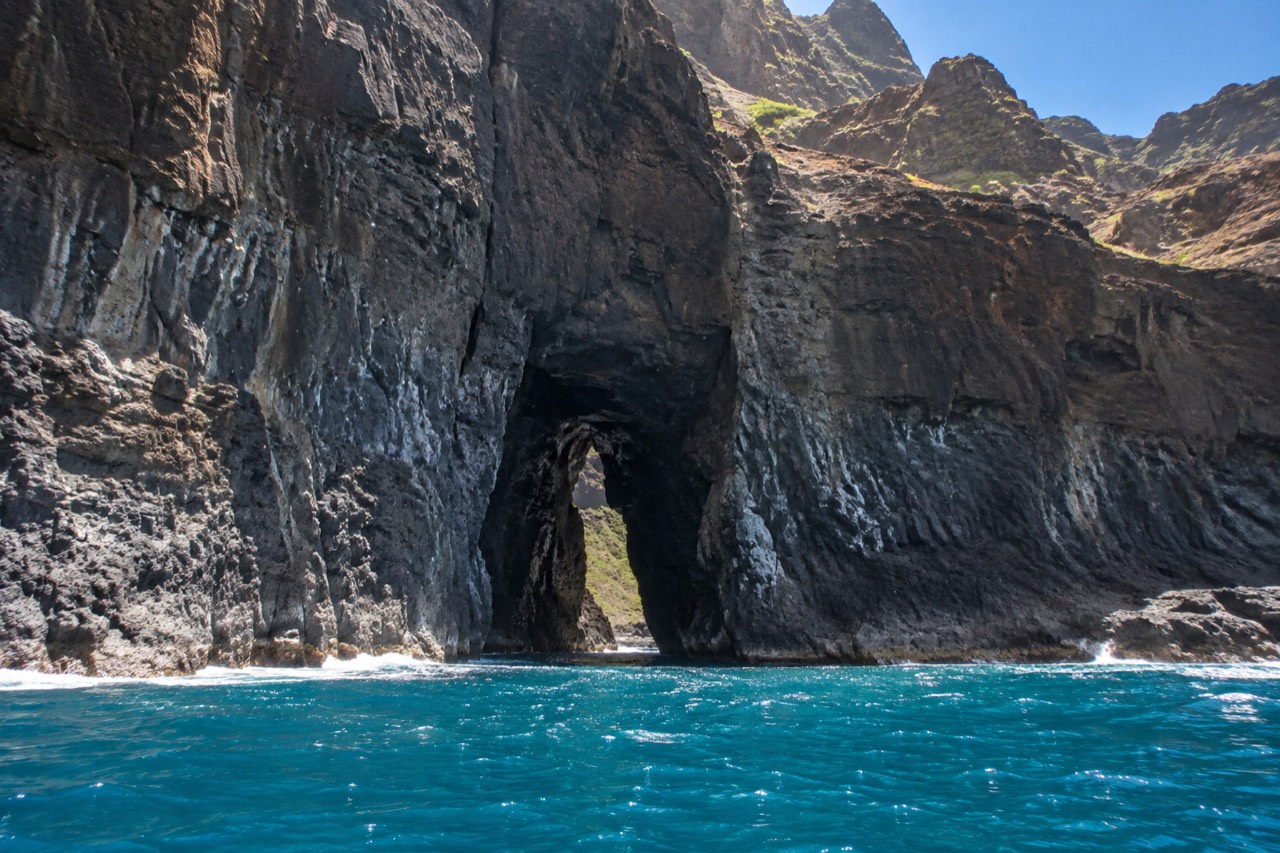
The Napali Coast's sea caves are former lava tubes that wave erosion has widened into open chambers along the cliff base, some with collapsed ceilings that act as skylights and freshwater streams cascading into the ocean. Operators use English trade names such as Open Ceiling Cave, Pirates Cave and Double Door Cave, and Honopu Arch is the coast's most photographed opening. No cave is a standalone attraction you can visit on foot.
The geology is worth thirty seconds because it explains everything else. The Napali cliffs are the eroded flank of an ancient shield volcano, and the same lava flows that built the coast left tubes behind. The ocean spent the last several hundred thousand years reaming those tubes out into sea caves, and it is still working on them. Some chambers have lost their ceilings entirely, which is what a captain means by an open ceiling cave: a shaft of daylight down into a room of seawater, sometimes with a waterfall pouring through it.
Operators name the caves by English trade names, and that is deliberate. Open Ceiling Cave, Pirates Cave and Double Door Cave are the names used on tour pages, and the underlying Hawaiian names are disputed between sources, so this site does not attach one to any individual cave. Honopu Arch, further along the coast, is a gazetted geographic feature and one of the most photographed spots on any Napali tour, a massive rock arch framing a sliver of beach that boats pass slowly.
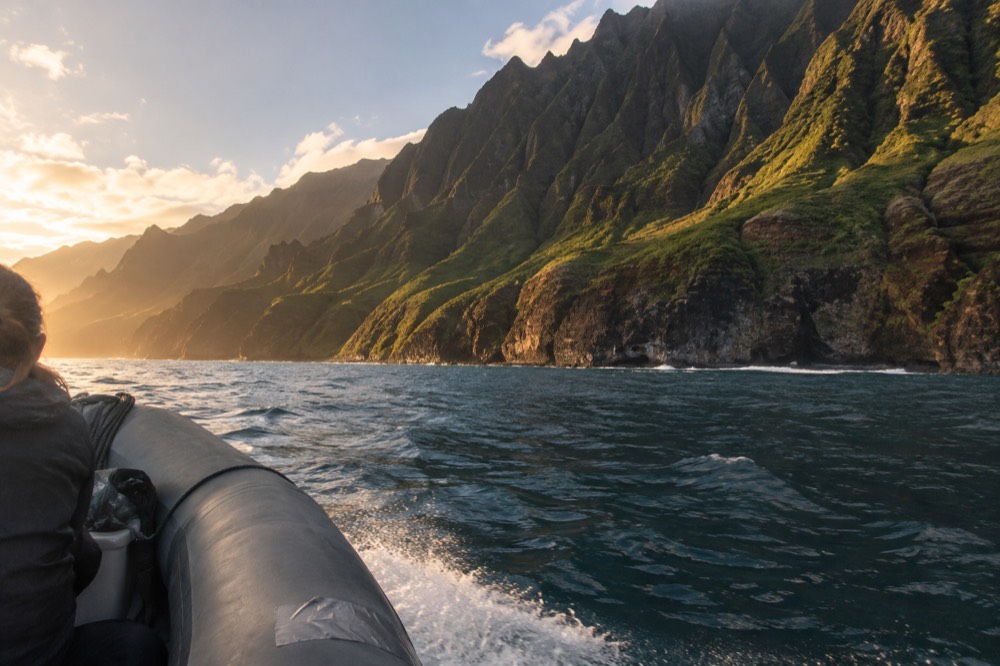
What the caves are not is a destination in themselves. There is no landing, no dock and no walk-in access. A cave visit is a few minutes of slow raft work inside a chamber while the driver holds position against the swell, and it is the single most weather-dependent fifteen minutes of any Napali tour. That is why the boat choice matters more than anything else on this page, and it is why the raft-versus-catamaran question comes next.
| Cave feature | What it is | How you experience it |
|---|---|---|
| Open Ceiling Cave | Lava tube chamber with a collapsed roof | Raft drifts inside, daylight shaft above, freshwater cascade possible |
| Pirates Cave | Long ocean-level chamber | Slow raft transit through the opening when swell allows |
| Double Door Cave | Chamber with two connected entrances | Raft passes through one opening and out the other |
| Honopu Arch | Gazetted natural rock arch with a beach | Every boat slows for photos, no entry required |
Which Boats Can Enter A Sea Cave?
Only small rigid-hull inflatable rafts reliably enter the Napali sea caves. Operators state that larger catamarans are too tall, too wide and draw too much water to fit safely inside, while one small power catamaran operator claims its vessel is built to enter. Sailing catamarans never enter. On this roster, the raft and Zodiac products are the cave boats.
The physics is unglamorous. A cave entrance is a wave-cut hole at the waterline, and the room behind it is often lower than the cliff face around it. A 24-foot rigid-hull raft with a flexible collar can nose in, hold position and back out. A 49-guest catamaran with a cabin, railings and a deep hull cannot get its superstructure under the overhang, which is exactly how Captain Andy's puts it on its own sea caves page: larger boats cannot safely enter due to their height, width and draft. The operator's cave page describes the same 24-foot rafts entering only after the captain evaluates swell, wind and surf.
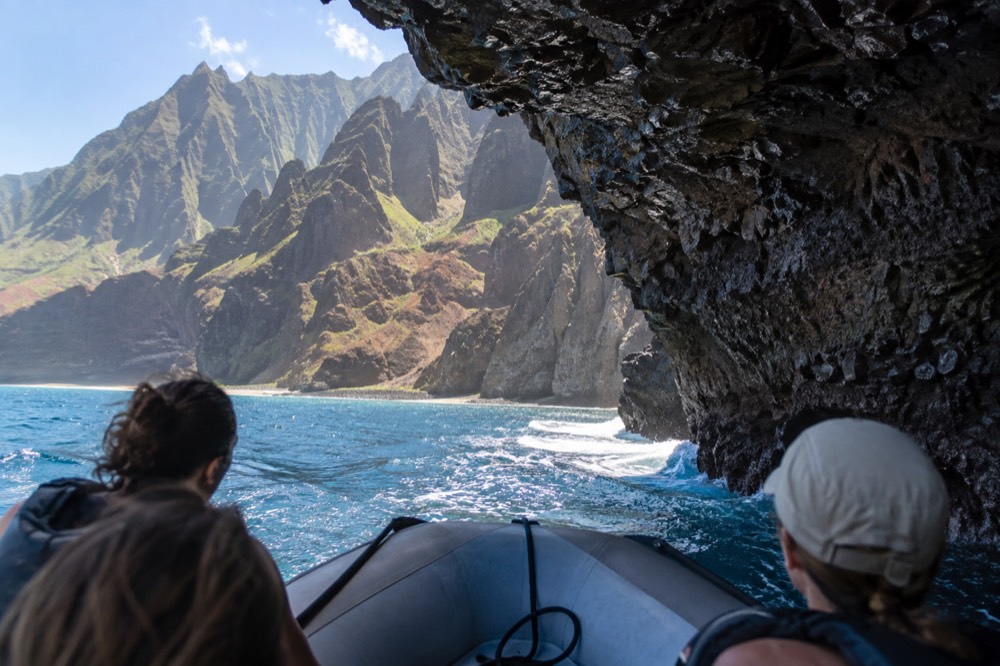
There is one wrinkle worth knowing. A north-shore operator states that its power catamaran is specifically designed to enter sea caves and that no sailing catamaran can. That is a claim about one company's own vessel, and the honest summary is: rigid-hull rafts are the reliable cave boat, large sailing catamarans never enter, and one small powered catamaran says it does. Anyone who flattens that into "catamarans can" or "catamarans can't" is oversimplifying.
On this site's roster, the choice is straightforward. The raft and Zodiac products are your cave boats, and the catamarans are your comfort boats. If the caves are the reason you are booking, start with the rafts.
For a reader weighing the two formats side by side, the raft-snorkel product from Kauai Sea Tours runs 5 hours 30 minutes from Port Allen, rated 4.8 from 1656 reviews, from $217 per person, with breakfast included and a maximum of 14 guests. The 3-hour Zodiac option from Na Pali Riders, rated 4.9 from 279 reviews and from $225, is the shorter, cheaper cave-first trip. The power catamaran from Na Pali Experience, rated 5 from 811 reviews and from $274.93, is the comfort alternative that still lists sea caves, conditions permitting. If you want a fuller comparison of the formats, the raft tours guide breaks down every hull type on the coast.
| Boat format | Enters caves? | Typical guest count | Best for |
|---|---|---|---|
| Rigid-hull inflatable raft | Yes, conditions permitting | 14 to 35 | Cave entry, adventure, close to the cliffs |
| Zodiac expedition raft | Yes, conditions permitting | Small groups | Short cave-focused trips |
| Power catamaran | One operator claims yes; others no | Up to 49 | Stability, shade, families |
| Sailing catamaran | No | Up to 49 | Comfort, sail time, sunset |
Why Is Cave Entry Never Guaranteed?
No operator on this coast guarantees cave entry, and several disclaim it in writing. Captains decide on the day, once they can see the water at the cave mouths, because ground swell size, not the schedule, determines whether a raft can hold position inside a chamber. Three major operators state this explicitly on their own pages.
This is the paragraph to read twice. Captain Andy's writes that snorkeling, cave access and beach landings are all weather and ocean condition dependent, and as such are conditions permitting and not guaranteed. Na Pali Catamaran says it does not guarantee snorkeling or entry into sea caves, that this is always the goal, but the captain makes the determination on the day of the tour. Makana Charters says its captains decide once they see the water that day, not before. Three independent operators, one identical message.
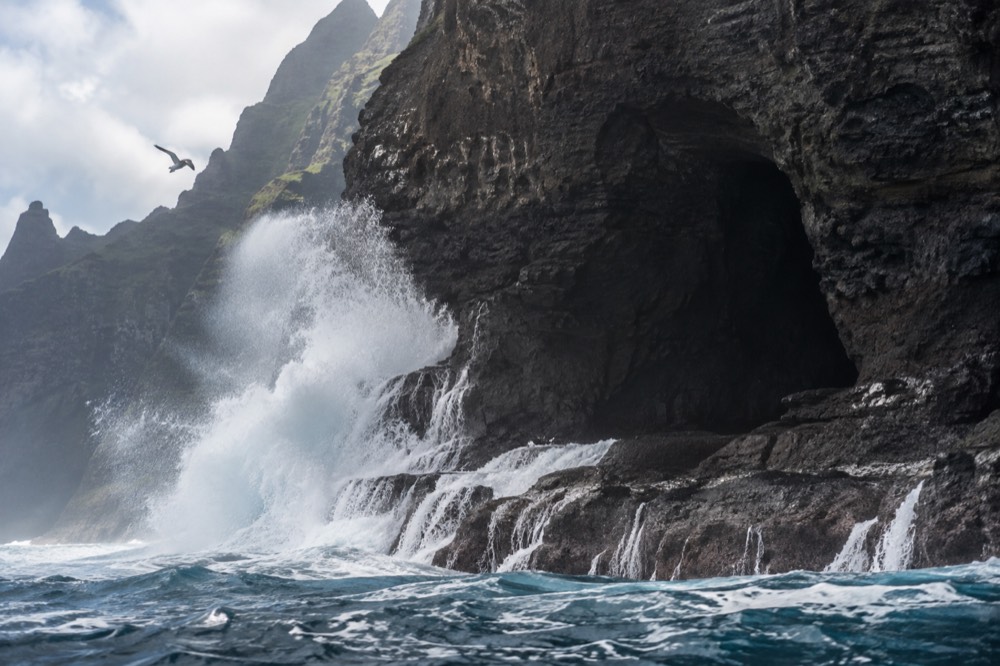
The reason is mechanical rather than cautious. A cave mouth is a funnel. Ocean swell that looks modest in open water stacks up as it enters a confined opening, and the ceiling height inside changes with every wave. A captain needs enough clearance between the crest and the rock to hold a raft inside without the collar grinding stone. On a small swell day that is easy. On a two-metre ground swell it is impossible, and no discount, no review and no amount of asking changes the geometry.
There is a regulatory backdrop that makes the caution structural, not optional. Since a 2025 court order, the state Division of Boating and Ocean Recreation is not issuing new Commercial Use Permits and will not authorize increases in passenger capacity on existing permits, which means the operators running cave tours today are the ones who will be running them next year, at fixed capacity. The DLNR clarification froze the fleet. An operator that pushes a raft into a cave on a marginal day is risking a permit it can never replace, and every captain on this coast knows it.
What Sea State Closes The Caves?
The caves close when ground swell rises, and the National Weather Service in Honolulu issues high surf advisories for Kauai's west-facing shores at 12 feet and warnings at 20 feet. North-facing shores trigger at 15 and 25 feet. Two recent years of buoy data show summer months almost never record offshore wave heights at or above 2.5 metres, while December and January do about half the time.
The numbers are worth knowing because they are the same numbers the captains use. The NWS Honolulu forecast office sets the advisory and warning thresholds for each shore orientation separately, and the west-facing thresholds matter most for the Port Allen and Kikiaola departures. The published surf criteria split Kauai's shores into north, west, south and east facing, each with its own trigger heights.
| Kauai shore orientation | High Surf Advisory | High Surf Warning |
|---|---|---|
| North facing | 15 feet | 25 feet |
| West facing | 12 feet | 20 feet |
| South facing | 10 feet | 15 feet |
Two recent years of measured data from the Hanalei buoy, which sits offshore of the north shore in about 200 metres of water, put hard numbers on the seasons. From June through September, the buoy essentially never recorded significant wave height at or above 2.5 metres: between 0.1 and 1.6 percent of observations. In December and January it was at or above that mark about half the time, and above 3.5 metres in 16 to 24 percent of January observations. April and October are the genuine shoulders, rougher than summer but far calmer than midwinter. Two caveats travel with that data: it is two recent years rather than a long climatology, and offshore wave height is not breaker height at the cliff face, so treat it as a picture of the offshore sea state.
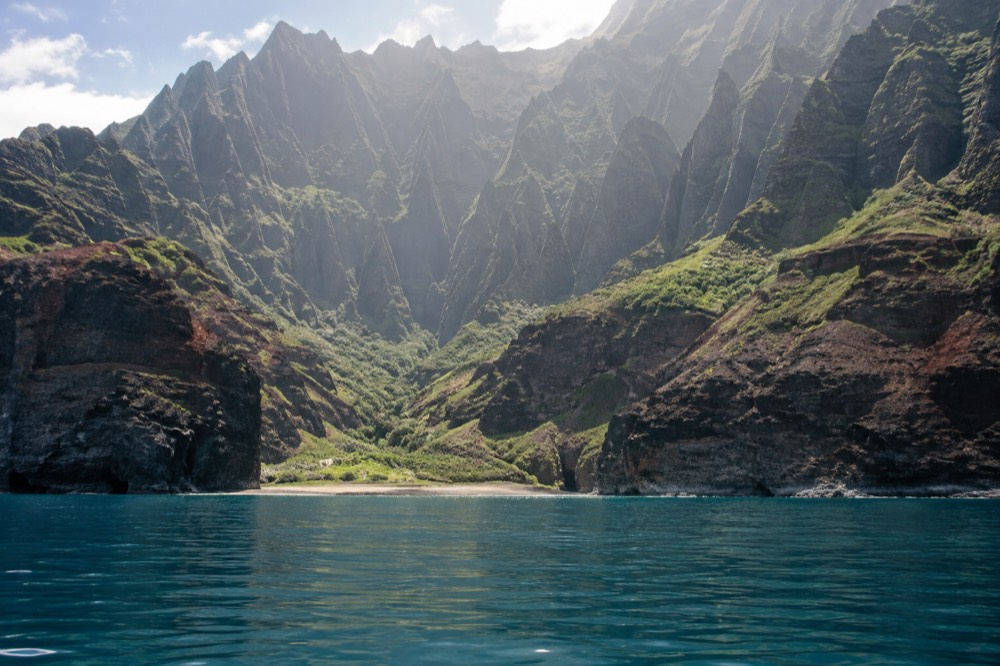
For planning purposes the takeaway is simple. If the forecast shows a solid northwest swell, the caves will likely be closed that day regardless of how calm the morning looks, because swell period and direction, not local wind, decide. If you want a deeper dive into the seasonal windows, the boat tour season guide covers the whole year month by month.
Which Months Give The Best Odds?
Summer gives the best cave odds by a wide margin. Operators state that in summer it is usually possible to enter the caves, while winter conditions make full access less likely, and two recent years of buoy data back that up, with June through September recording almost no observations at or above 2.5 metres. April, May, September and October are genuine shoulder months with decent odds.
The operator statements and the buoy data agree, which is rarer than it should be in travel writing. Captain Andy's FAQ says the caves are affected by ground swells and that swell size is not related to time of day, then adds that in the summer months it is usually possible to enter the caves, while winter conditions tend to be rougher and full cave exploration is less likely. The buoy record says the same thing in numbers. That combination, an operator's own page plus measured ocean data, is about as solid as a planning claim gets on this coast.
| Month | Share of buoy observations at or above 2.5 m | Cave entry odds |
|---|---|---|
| May | 5.6% | Very good |
| June | 0.2% | Excellent |
| July | 0.1% | Excellent |
| August | 1.6% | Excellent |
| September | 0.1% | Excellent |
| October | 10.8% | Good, variable |
| November | 42.6% | Coin flip |
| December | 46.4% | Unlikely |
| January | 52.2% | Unlikely |
| February | 47.5% | Unlikely |
One planning note that follows from the data: book your cave tour early in your stay, not on your last day. Operators themselves recommend this, because if the swell closes the caves you want a spare day to rebook. A raft booked for day two of a week-long trip that gets weathered out can usually move to day four. A raft booked for your final morning has nowhere to go, and free cancellation does not manufacture another day on the island.
Can You Swim Inside The Caves?
Snorkelling near the caves happens on raft tours, but swimming inside a cave chamber is not a scheduled activity, and the snorkel stop is a separate part of the trip chosen for calm water. State rules require a displayed diver flag with snorkellers within 100 feet of it, and protected marine life carries legal approach distances. Reef-safe sunscreen rules apply statewide.
The honest answer is that cave entry and snorkelling are two different moments on the same tour. The raft goes inside the cave with everyone seated and holding on. The snorkel stop happens afterwards, in a location the captain picks for calm water and visibility, often a reef or cove rather than a cave mouth. On the roster's raft products, snorkelling is listed alongside sea caves, both conditions permitting, and the two are not bundled into one activity.
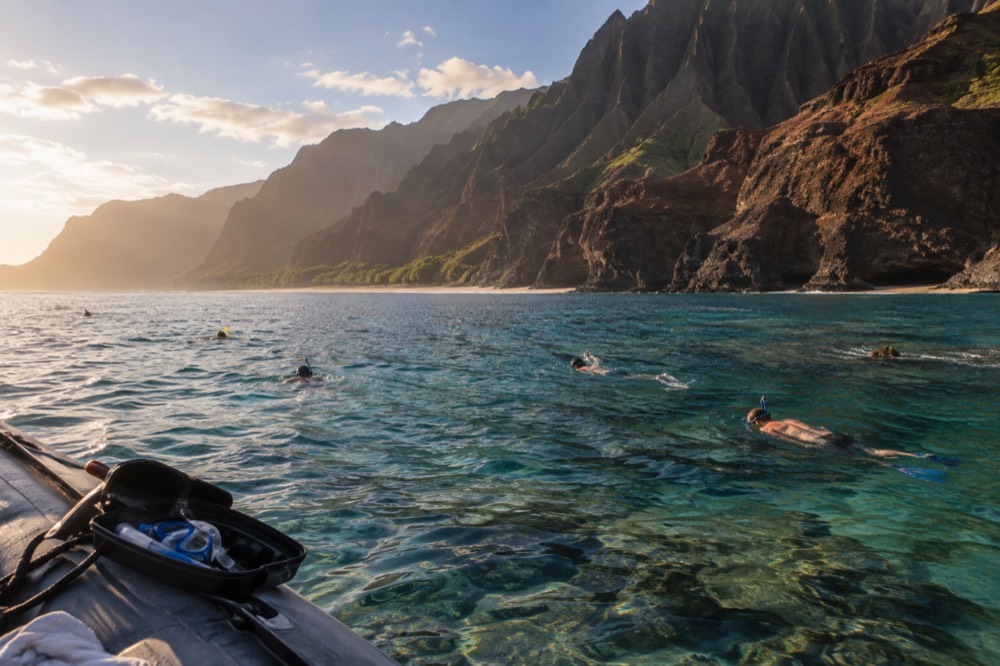
When you do get in the water, three rules matter. Hawaii administrative rules require anyone snorkelling in navigable waters to display a diver's flag at least 12 by 12 inches, with snorkellers staying within 100 feet of the flag and vessels keeping 100 feet away. Hawaiian monk seals are protected at all times, with recommended viewing distances of 50 feet, rising to 150 feet for mothers with pups, and green sea turtles are fully protected with no open season. And Hawaii's statewide sunscreen law prohibits the sale of sunscreens containing oxybenzone or octinoxate without a prescription, so bring a mineral sunscreen with zinc oxide or titanium dioxide.
If the swimming rather than the caves is your priority, the snorkel tours guide compares every snorkel product on the coast, including the Niihau trips that snorkel near Lehua Crater across the channel.
Which Tours Should You Book For Caves?
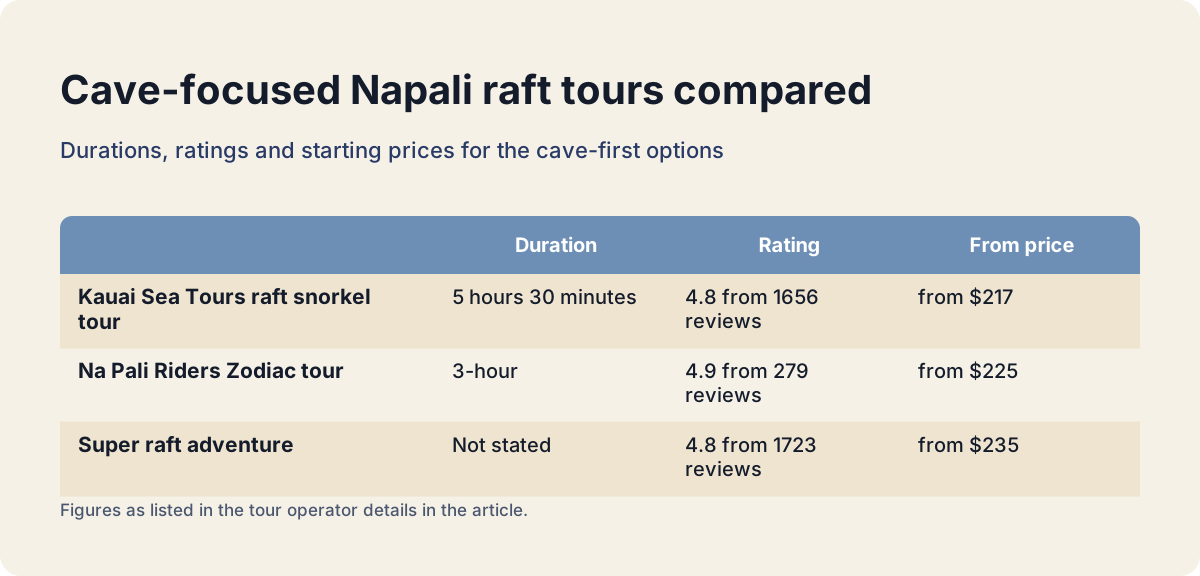
Book a rigid-hull raft tour from Port Allen or Kikiaola if the caves are your priority. The strongest cave-focused options on this roster are the 5 hour 30 minute raft snorkel tour from Kauai Sea Tours at 4.8 from 1656 reviews, from $217, the Na Pali Riders Zodiac products at 4.9, and the super raft adventure at 4.8 from 1723 reviews, from $235. Every one includes cave access, conditions permitting.
Start with the raft snorkel tour from Kauai Sea Tours. It runs 5 hours 30 minutes from Port Allen, carries a maximum of 14 guests, includes breakfast, and rates 4.8 from 1656 reviews, from $217 per person. It operates all year, weather permitting, and its small guest count is exactly why it is the related pick for this page: fourteen people on a rigid-hull raft is the configuration that spends the most time working the cliff base and the cave mouths.
The Zodiac products from Na Pali Riders run from Kikiaola near Waimea and are the most cave-first trips on the roster. The 4-hour Zodiac expedition and snorkel tour rates 4.9 from 956 reviews, from $255, and the 3-hour sea caves and snorkel option rates 4.9 from 279 reviews, from $225, with cave entry and snorkelling most reliable in summer per the operator's own season note. These are shorter, punchier trips that spend their minutes on the cliffs and caves rather than on a long sail out.
| Tour | Operator | Duration | Harbour | Rating | From |
|---|---|---|---|---|---|
| Raft Snorkel Adventure | Kauai Sea Tours | 5 hours 30 minutes | Port Allen | 4.8 from 1656 reviews | $217 |
| Super Raft Snorkel Adventure | Captain J's | 4 hours 30 minutes | Port Allen | 4.8 from 1723 reviews | $235 |
| Zodiac Sea Caves + Snorkel Option | Na Pali Riders | 3 hours | Kikiaola | 4.9 from 279 reviews | $225 |
| Zodiac Raft Expedition | Na Pali Riders | 4 hours | Kikiaola | 4.9 from 956 reviews | $255 |
| Ultimate Zodiac Snorkel and Sea Cave | Kauai Sea Rider | 5 hours | Kikiaola | 4.7 from 111 reviews | $257.28 |
| Power Catamaran | Na Pali Experience | 4 hours 30 minutes | Kikiaola | 5 from 811 reviews | $274.93 |
Note what is not on that list: every large catamaran product. The deluxe catamaran cruises, the sunset sails and the sailing tours are superb coast experiences, and Napali Coast Boat Tours covers them across the site, but they will bring you past the caves, not inside them. If your heart is set on a chamber with a skylight, the raft is the only honest answer.
What Happens If The Caves Are Closed?
If swell closes the caves, your tour still runs along the coast, and the captain adjusts the route at check-in. Operators offer a continue, reschedule or full refund choice when conditions force a change, and every product on this roster carries free cancellation. Cancellation notice can come as late as the morning of departure, so booking early in your stay matters.
The operators are unusually clear about this, which helps. Holo Holo Charters states that wind and swell are the primary factors leading to a cancellation or route adjustment, that the captain communicates any change at check-in, and that guests then choose to continue, reschedule or take a full refund. It also notes rain alone does not cancel a tour, since it frequently rains on land while the water stays clear. Na Pali Catamaran warns that notice could come 24 hours, 4 hours or even 20 minutes before departure, and recommends booking early in your trip so there is room to rebook on another day.
| Scenario | What happens | Your options |
|---|---|---|
| Swell too large for caves, coast reachable | Tour runs, caves skipped, more time on cliffs and snorkel | Continue, reschedule or refund |
| Whole coast unreachable | Cancellation before departure | Reschedule or full refund |
| Rain only, sea state fine | Tour runs as booked | Continue |
| Route adjusted at check-in | Captain announces change before boarding | Continue, reschedule or refund |
So the practical playbook is short. Book a raft, book it for the front half of your trip, book it in summer if you have the choice, and check the swell forecast the evening before. If the caves close, you still get the cliffs, the waterfalls and the snorkel stop, which is a day very few people regret. And if you want the full picture of how the coast behaves through the year, the best time to visit Kauai guide walks through weather, crowds and pricing together.
Common Questions About The Napali Coast Sea Caves
What Sea Caves Are On The Napali Coast?
Former lava tubes widened by wave erosion into open chambers, including Open Ceiling Cave, Pirates Cave and Double Door Cave, plus the famous Honopu Arch. Some have collapsed ceilings forming skylights with freshwater cascades into the ocean.
Which Boats Can Enter A Sea Cave?
Small rigid-hull inflatable rafts and Zodiacs are the reliable cave boats. Large catamarans are too tall, wide and deep to enter safely. One small power catamaran operator claims its vessel can enter, but sailing catamarans cannot.
Why Is Cave Entry Never Guaranteed?
Captains decide on the day based on ground swell, and multiple operators disclaim any guarantee in writing. The state has also frozen commercial permits and capacity, so operators have every incentive to err on the side of caution.
What Sea State Closes The Caves?
Rising ground swell. NWS Honolulu advises high surf for Kauai's west-facing shores at 12 feet and warns at 20 feet. Two recent years of buoy data show summer almost never reaches 2.5 metres offshore, while December and January do about half the time.
Which Months Give The Best Odds?
June through September are the best months, with operators stating cave entry is usually possible in summer. May is close behind. November through February are the hardest months, with roughly half of offshore observations at or above 2.5 metres.
Can You Swim Inside The Caves?
Not as a scheduled activity. Cave transit happens with passengers seated on the raft, and the snorkel stop is a separate location chosen for calm water. Snorkelling follows state diver-flag rules and marine life approach distances.
What Happens If The Caves Are Closed?
The tour usually still runs along the coast with the caves skipped, and the captain announces any route change at check-in. You can continue, reschedule or take a full refund, and every product on this roster carries free cancellation.