Best Time Of Year For A Napali Coast Boat Tour
The Napali Coast does not have an official boat season, but it has a very real swell season, and the two are opposites. Here is what actually changes through the year, month by month, and how to pick the tour that matches your dates.
Short answer
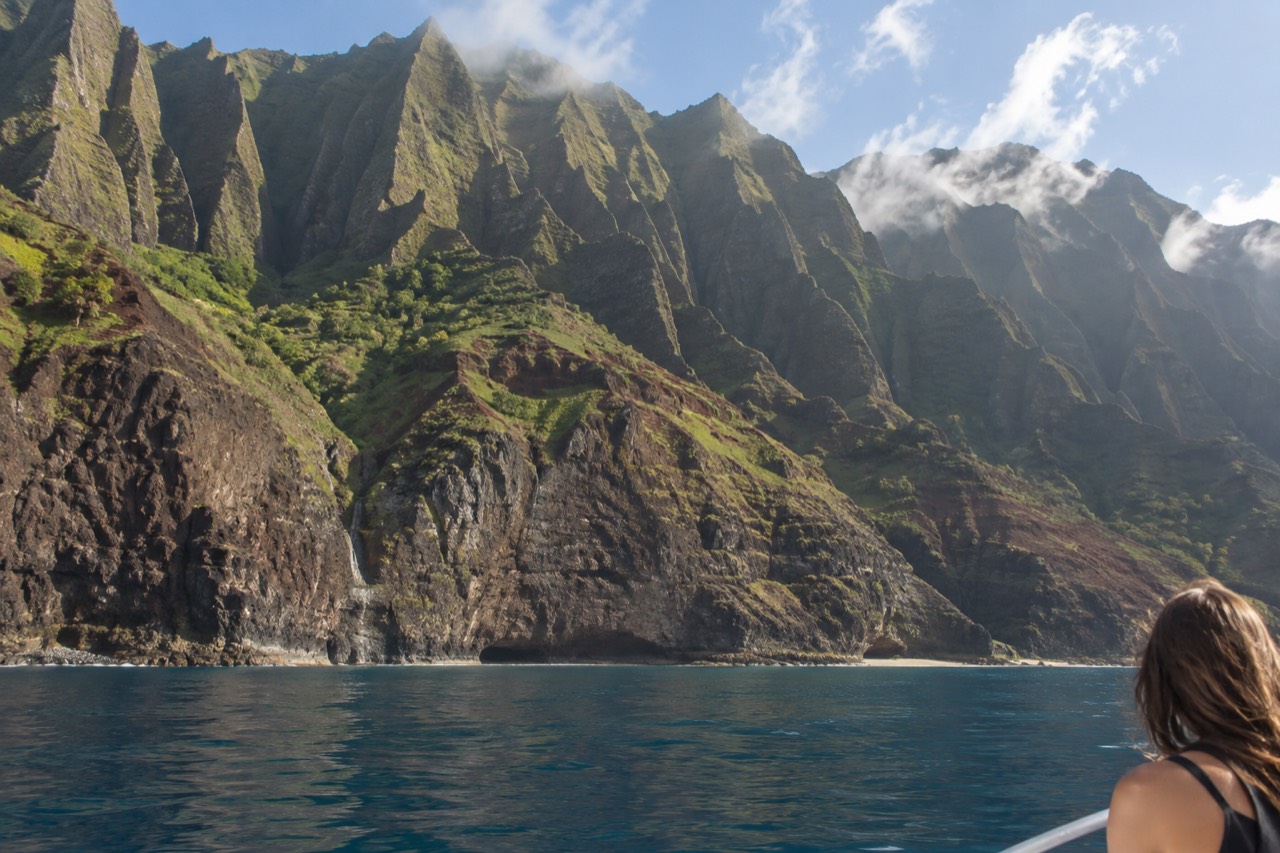
There is no regulated motor-boat season on the Napali Coast. West-side tours from Port Allen and Kikiaola run all year, conditions permitting, and the calmest, most cave-friendly water lands between June and September. Whales overlap the rougher months, November through April. Book the raft and cave tours for summer, sunset and whale-season trips for winter.
Best Time Of Year For A Napali Coast Boat Tour
The Napali Coast has no official motor-boat season. What it has is a northwest swell that arrives every winter, a set of trade winds that settle every summer, and a product mix that rotates around both. Travel articles repeatedly quote a "May to September" window for Napali boats, and that figure is wrong in a specific, checkable way: those dates are the state's kayak and Miloliʻi landing rules, not a boat season. Motor-boat tours run year round from the west side, and the difference between a good month and a rough one is the sea state, not a permit calendar.
This page lays out what actually changes through the year: which months the buoy data says are calm, when the sea caves are most likely to open, when the humpbacks are in the water, and which tour on this site fits each month. The short version: June through September is the prime window for the full experience, and winter trades that away in exchange for whales.
What Makes The Napali Sea Seasonal?
The Napali Coast is seasonal because of northwest swell, not regulation. Deep North Pacific winter swells arrive November through March and raise the offshore sea state dramatically, while summer trades blow steadily but the swell drops away, giving the calm water the coast is famous for. No state or federal rule sets a motor-boat season; only kayaking is regulated to summer.
The mechanism is simple. Kauai's northwest coast faces straight into the North Pacific, which generates its biggest storms in boreal winter. From November through March, long-period swells roll thousands of miles south and hit the Napali cliffs first. From roughly May through September, that source goes quiet, and what is left is the local trade-wind sea, which is shorter, choppier in the afternoons, but far smaller. The coast is leeward to the trades, so the wind swell there is modest even when it is blowing hard on the east side of the island.
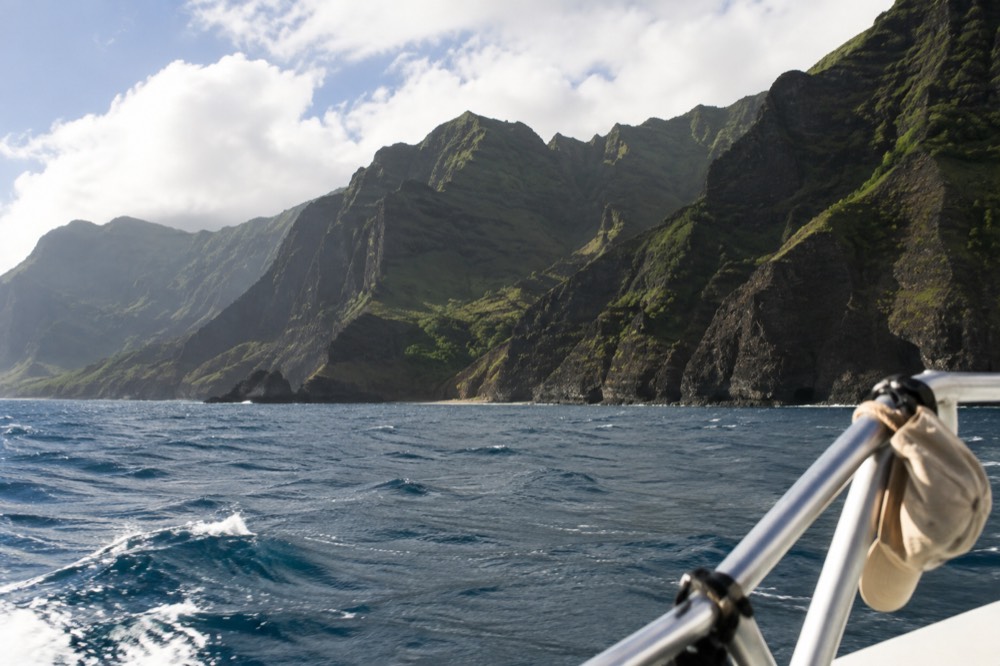
The one genuinely regulated season is paddling. State Parks permits kayaking the coast "only during the summer months, between May 15 and September 7", because unpredictable sea conditions make it unsafe the rest of the year, and that is where the widely repeated May-to-September figure comes from. Travel writers lifted the kayak rule and applied it to motor boats, where it does not belong. The same page permits the raft concessionaires to land passengers at Nuʻalolo Kai without any state season attached.
Rain matters far less than people assume. Lihue's climate record shows a January mean maximum of 78.6 degrees Fahrenheit with 2.78 inches of rain, and the west side, where every tour on this site departs, is drier still. Operators state plainly that light rain does not cancel a tour; wind and swell do. A cloudy, showery summer morning is usually still a go.
| Season | Dominant ocean force | Typical effect on a Napali tour |
|---|---|---|
| Summer, June to September | Small northwest swell, steady trades | Calm mornings, cave entry most likely, snorkel stops run |
| Shoulder, April to May and October | Mixed swell, transitional trades | Good days with warning days; cave entry a coin toss |
| Winter, November to March | Large northwest ground swell | Rough passages, cave entry unlikely, whale sightings peak |
What Happens On The North Shore In Winter?
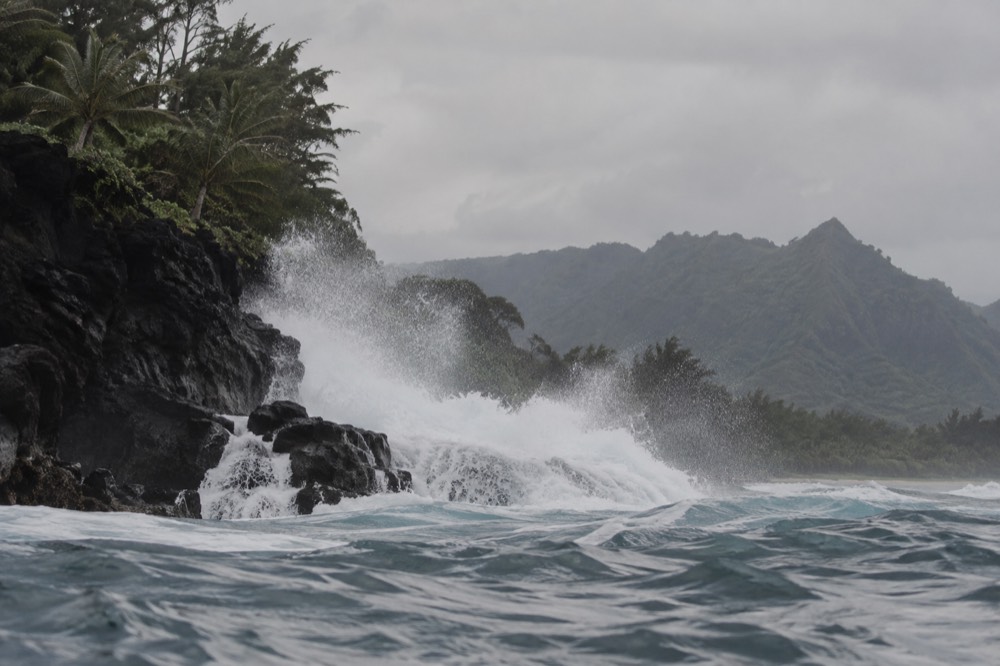
The north shore around Hanalei has no harbor at all, so boats work off the open bay, and winter surf makes that launching method genuinely hazardous. Some north-shore operators historically dry-docked all winter; others now run shortened, sightseeing-only trips on the calm days between swells. Every tour on this site departs the west side instead.
Hanalei Bay is an open roadstead. There is no breakwater, no berths, no ramp sheltered from the swell, and the bay faces the same North Pacific energy the Napali cliffs do. That is the whole reason the north shore is seasonal: it is physics, not a rule. The state's harbor list for Kauai includes Port Allen and Kikiaola but no Hanalei facility, which is the verifiable version of the claim.
Operators who work the north shore describe the winter reality themselves. One describes "big winter surf making boat tours challenging during certain months" and offers modified tours to take advantage of calmer days between swells, after years of dry-docking through the winter entirely. Their winter product is a three-hour sightseeing run with no snorkeling and no lunch, precisely because the ocean is unpredictable enough that provisioning a full day is not worth the cancellation risk.
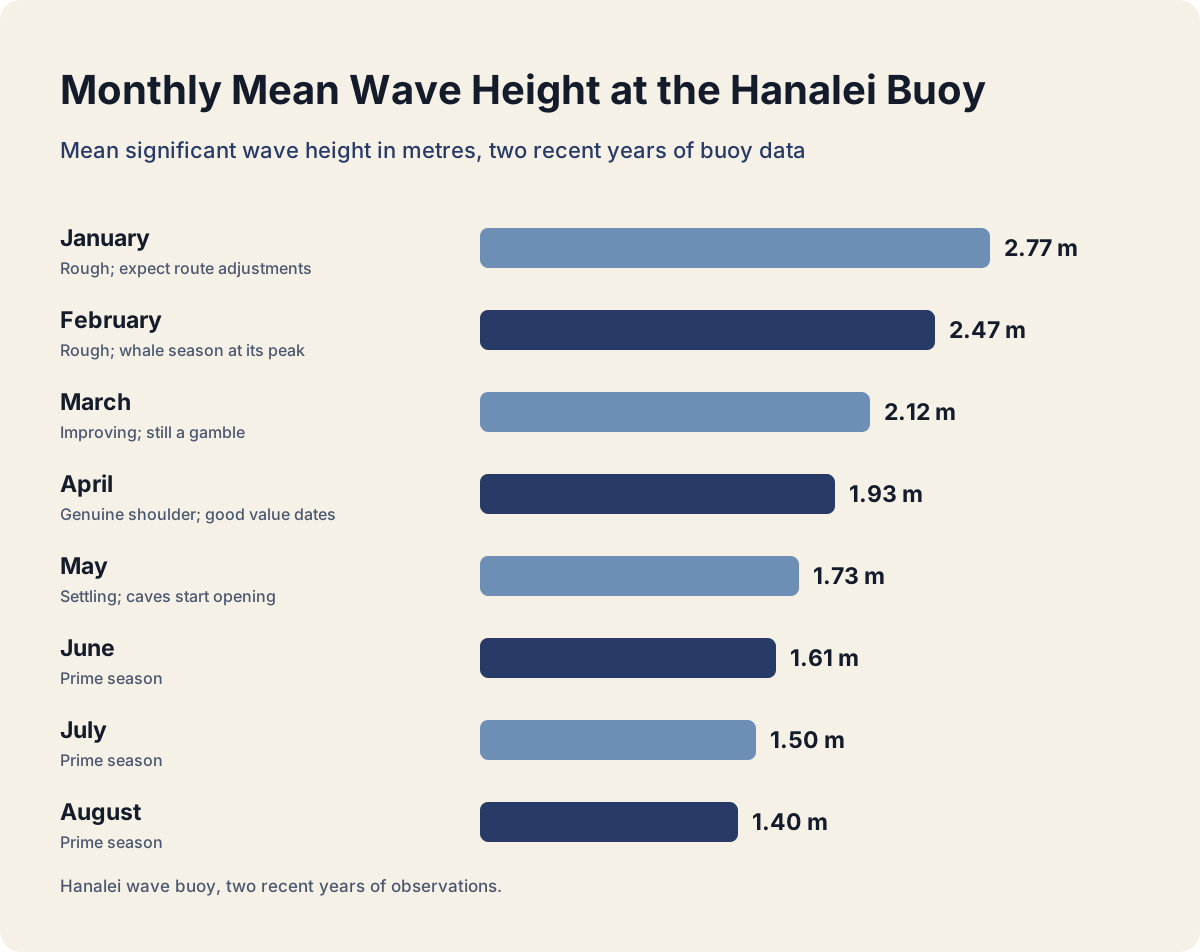
The buoy data backs this up. The Hanalei wave buoy, moored offshore in deep water, recorded mean significant wave heights of 2.77 metres in January and 2.61 metres in December across two recent years, with observations at or above 2.5 metres roughly half the time in both months. In July the same record shows a mean of 1.50 metres. That is the north-shore winter in one line: the sea the boats launch through is nearly double its summer height.
For a reader planning dates, the practical translation is this: if you are staying on the north shore, the drive to a reliable departure is to the west side, and the comparison of the two sides is laid out in Kauai North Shore Versus West Side Boat Tours. Hanalei departures exist in the calm season, but none of the 26 tours sold on this site leaves from there.
| Factor | North shore, Hanalei | West side, Port Allen and Kikiaola |
|---|---|---|
| Harbor | None; open-bay beach launching | Two state small-boat harbors |
| Winter operation | Reduced, sightseeing-only, conditions-dependent | Year-round, full product mix rotates |
| Exposure to northwest swell | Direct | Direct on the coast, sheltered launch |
| Tours on this site | None | All 26 |
Does The West Side Run All Year?
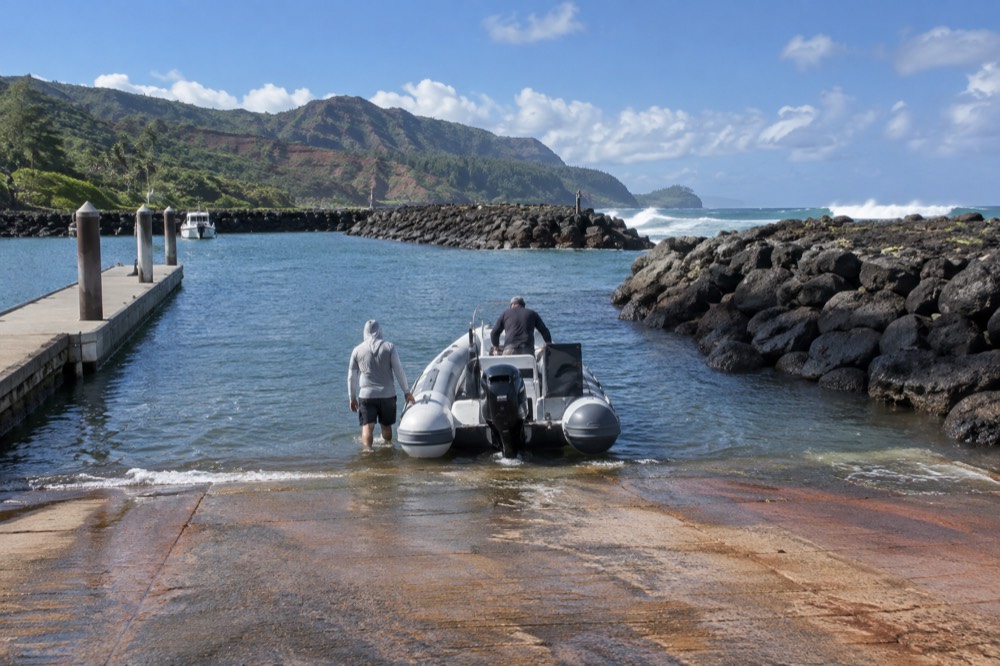
Yes, and it is the operators' own claim about their own boats. West-side tours from Port Allen and Kikiaola run every month of the year, conditions permitting, with 18 departures from Port Allen and 8 from Kikiaola on this site's roster. What rotates through the year is the product mix: which tours run, how long they are, and whether lunch and a beach landing are on them.
One operator's own seasonal matrix is the clearest published example. Their morning cave-and-snorkel raft tour runs all year. The afternoon version runs only in the shoulder windows of April to mid-May and mid-September to December. Their six-hour expedition with a beach landing runs mid-September to mid-May, the shorter beach-landing tour runs mid-May to mid-September, and a caves-only patrol runs the summer. A January visitor can board a west-side Napali boat; what changes is which tour it is.
The roster on this site reflects the same pattern. The raft snorkel adventure runs all year, weather permitting, and carries a maximum of 14 guests. The express sunset tour aboard 'Imiloa runs year round, conditions permitting, from $190 per person, which is the lowest price on the entire roster. The summer-only products, like the express snorkel tour, are the ones that depend on reliable water for their snorkel stop.
The booking-relevant takeaway is that seasonality on the west side is about expectations, not availability. Book in January and you will get a boat; you may not get the caves, and you should not expect one. Book in July and the full menu is live. Every tour on this site also carries free cancellation, which matters more in winter, when the odds of a weather reschedule are highest.
| Product type | Typical winter availability | Typical summer availability |
|---|---|---|
| Morning snorkel raft tour | Runs all year | Runs all year |
| Afternoon snorkel tour | Shoulder windows only | Runs daily |
| Beach-landing expedition | Mid-September to mid-May | Mid-May to mid-September version |
| Sunset dinner cruise | Runs, often the best winter pick | Runs, books out faster |
| Caves-only short raft | Rare | Runs in summer window |
Which Months Give The Calmest Water?
June through September give the calmest offshore water on record. Two recent years of buoy data show mean significant wave heights of 1.40 to 1.61 metres across those months, with essentially no observations at or above 2.5 metres. December and January are the roughest, with means of 2.61 and 2.77 metres and roughly half of observations at or above 2.5 metres.
The numbers come from the Hanalei wave buoy, the only long-record directional buoy off Kauai, which transmits wave height, direction and period every 30 minutes. Reduced to monthly means over two recent years, the pattern is unambiguous: a flat summer trough, a deep winter peak, and two genuine shoulders in April and October rather than the May and September dates travel writing usually quotes.
Two honest caveats travel with this data. It is two years, not a 30-year climatology, so it shows recent reality rather than a long-run average. And it is offshore significant wave height in deep water, which is not breaker height at the cliff line and not exactly what the deck of a raft feels; it is the best available proxy for how the day will go.
| Month | Mean wave height | Share of observations at or above 2.5 m | What it means for a tour |
|---|---|---|---|
| January | 2.77 m | 52.2% | Rough; expect route adjustments |
| February | 2.47 m | 47.5% | Rough; whale season at its peak |
| March | 2.12 m | 28.3% | Improving; still a gamble |
| April | 1.93 m | 16.3% | Genuine shoulder; good value dates |
| May | 1.73 m | 5.6% | Settling; caves start opening |
| June | 1.61 m | 0.2% | Prime season |
| July | 1.50 m | 0.1% | Prime season |
| August | 1.40 m | 1.6% | Prime season |
| September | 1.42 m | 0.1% | Prime season, thinner crowds |
| October | 1.76 m | 10.8% | Shoulder; cave odds shorten |
| November | 2.42 m | 42.6% | Rough; whales arriving |
| December | 2.61 m | 46.4% | Rough; whale season |
The National Weather Service in Honolulu issues separate surf forecasts for Kauai's north, west, south and east shores, with high-surf advisories triggered at 15 feet for north-facing shores and 12 feet for west-facing ones. That four-way split is why a day can be flat on the Napali coast while the south shore is building, and why operators, not calendars, make the final call.
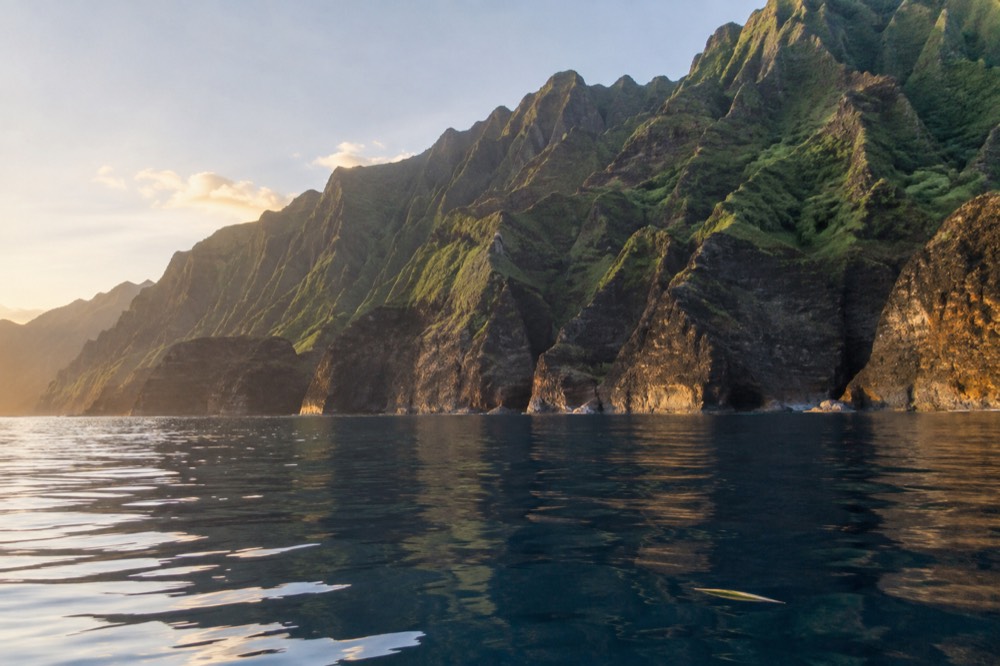
When Are The Caves Most Likely Open?
Sea-cave entry is most likely from roughly May through September, when the northwest swell is small, and least likely from November through March. No operator guarantees entry in any month; every one of them writes it as conditions permitting, at the captain's discretion on the day, because ground swell, not time of day, is what governs the caves.
The operators are unusually consistent on this point, which is worth trusting. One states that cave access, snorkeling and beach landings are all weather and ocean condition dependent and not guaranteed. Another says the captain makes the determination on the day of the tour if it is safe. A third says summer months usually make entry possible while winter conditions make full exploration less likely. Three independent operators, one message.
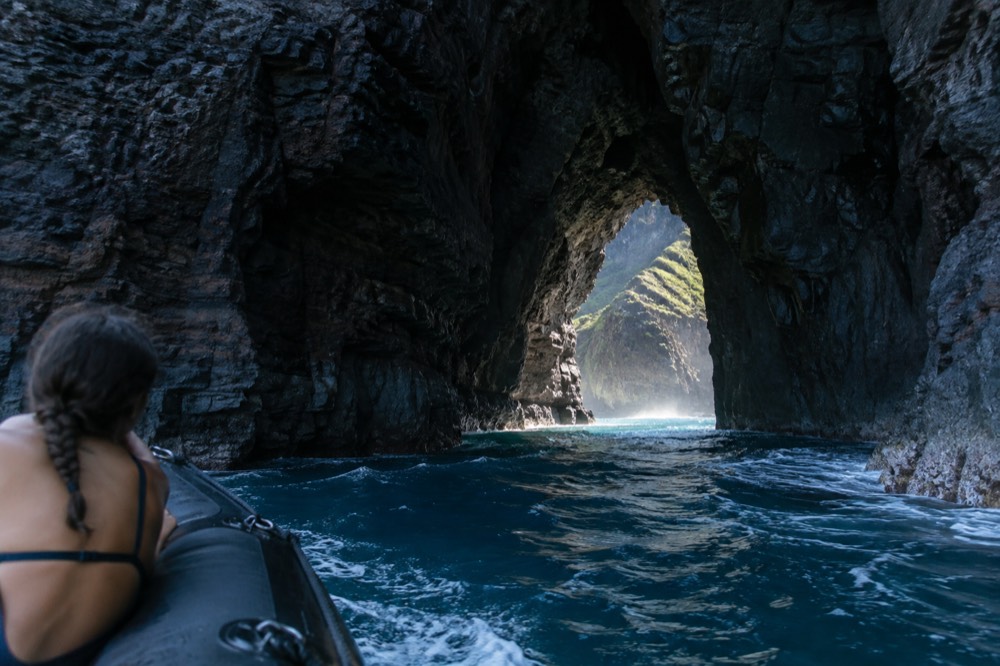
The boats matter as much as the calendar. Rigid-hull inflatable rafts are the reliable cave vessel; large catamarans are too wide, too tall and draw too much to enter safely, though they can hold close to the entrances. At least one small powered catamaran on the coast claims its vessel is built to enter, which is that operator's claim about its own boat. The honest framing: book a raft if going inside is the point of your day.
On this site's roster, the three-hour Zodiac sea caves tour with optional snorkel runs year round, subject to conditions, with cave entry and snorkeling most reliable in summer, from $225 per person with a 4.9 rating from 279 reviews. The five-and-a-half-hour raft snorkel adventure, from $217 per person with a 4.8 rating from 1,656 reviews, pairs the caves with a breakfast and a snorkel stop and runs all year, weather permitting. Both are covered in depth in Napali Coast Sea Caves.
One planning note that is easy to miss: morning tours are not calmer than afternoon tours in any guaranteed way, because swell size is not related to time of day. What mornings do offer is smoother trade-wind chop, since the winds build through the afternoon. The swell decides the caves; the clock only decides the chop.
When Are The Whales Here?
Humpback whales are in Hawaiian waters from November through April, with the commercial sighting season on Kauai running roughly December through March and peaking in January and February. That window overlaps the roughest sea state almost exactly, which is why winter whale products stay off the south and west shores rather than running the Napali coast.
The federal sanctuary puts the official window at November through April. Kauai operators sell whale tours inside that: one runs its whale watch from December through March and explicitly sends those trips to the west or south side of Kauai, not the Napali Coast; another runs a whale tour along the south shore. The reason is the buoy table above. The whales and the swell arrive together, so the winter whale product is a different route, not a Napali tour with whales attached.
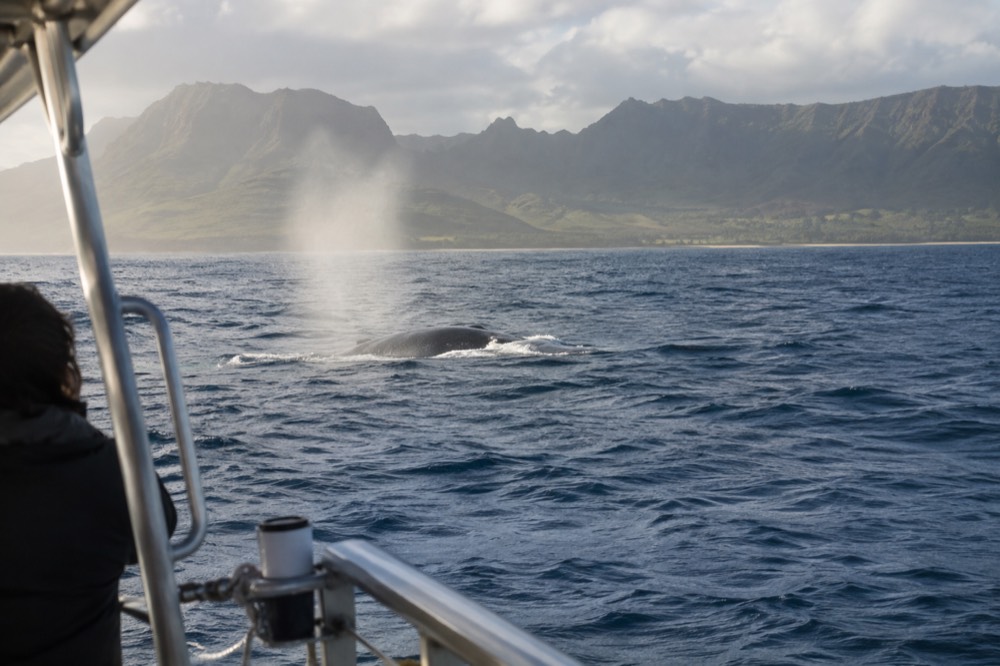
Community-science counts give a sense of the density: the sanctuary's coordinated shore count in late February 2026 logged 337 humpback sightings from Kauai stations alone, across 1,935 sightings statewide on a single day. Federal rules apply everywhere: vessels may not approach within 100 yards of a humpback, a rule that covers all waters within 200 nautical miles of Hawaii, including the Napali coast, which itself lies outside the sanctuary's Kauai boundary.
That is the winter trade in plain terms. Book December through March and you may see whales from any boat, including a Napali sunset cruise, but the caves will probably be closed and the ride will be wetter. The full whale-watching picture, including the dedicated products, is in Napali Coast Whale Watching Tours.
| Period | Whale presence | Napali tour reality |
|---|---|---|
| November | First arrivals | Rough sea, caves unlikely |
| December to March | Peak season | Whale tours run south and west shores |
| January and February | Highest sighting frequency | roughest months for the coast |
| April | Departing whales | Sea settling, caves reopening |
What Month Should You Book?
Book June through September if the caves and snorkeling are the point of the trip, September for prime water with thinner crowds, and April or October as value shoulders with honest cave risk. Book December through March only if whales are the priority, and expect route adjustments. The single best tactic in any month is booking early in your stay so a weather reschedule has room to land.
Demand tracks the water. Kauai recorded 128,883 visitor arrivals by air in June 2026 and 139,974 in July, the two biggest months on the calendar, against a first-half total of 647,009 arrivals. The calm season and the crowd season are the same season, which is why summer raft dates sell out first and why free cancellation, which every tour on this site carries, is worth using early.
The shoulder logic deserves more credit than it gets. April sits at a mean of 1.93 metres with 16.3 percent of observations rough, which is a real improvement on March, and the west side is entering its driest stretch. October is the mirror image: 1.76 metres and 10.8 percent, with the first winter swell possible at any time. Both months trade a small chance of a cancelled cave entry for noticeably easier booking and quieter boats.
| Month | Sea state | Crowd level | Verdict |
|---|---|---|---|
| January | Rough | Low | Whale trips only |
| February | Rough | Low | Whale trips only |
| March | Improving | Low | Gamble; whales still here |
| April | Shoulder | Low | Good value dates |
| May | Settling | Building | Caves start opening |
| June | Prime | Peak | Book well ahead |
| July | Prime | Peak | Book well ahead |
| August | Prime | Peak | Book well ahead |
| September | Prime | Thinning | Best overall month |
| October | Shoulder | Low | Good value, cave risk |
| November | Rough | Low | Expect adjustments |
| December | Rough | Moderate | Whales, holiday crowds |
Operators themselves recommend booking early in your stay precisely so a reschedule has room, and one gives cancellation notice windows as short as 20 minutes before departure on a genuinely fast-moving swell. A tour booked for your first full day can be moved; a tour booked for your last morning cannot.
Which Tour Suits Your Month?
Match the tour to the month, not the other way round. In prime summer months, book the raft cave-and-snorkel products, because that is when their headline features actually run. In winter, book the sunset and dinner cruises, which deliver their full value in any sea state, and leave the cave-dependent tours for a return trip in the calm season.
The reasoning is straightforward. A tour whose value is cave entry, snorkeling and a beach landing is selling things the winter ocean routinely takes away. A sunset cruise is selling light, dinner and the cliffs from the water, all of which survive a bumpy passage. Paying summer prices for a winter raft trip and losing the caves is the most common disappointment on this coast, and it is avoidable by reading the season before the listing.
| Tour | Format | Best months | Why |
|---|---|---|---|
| Zodiac sea caves with optional snorkel | 3-hour raft | May to September | Caves most reliable |
| Raft snorkel adventure | 5.5-hour raft, breakfast | April to October | Snorkel stop needs calm |
| Express sunset aboard 'Imiloa | 5-hour power catamaran | Year round | Sunset value in any swell |
| Sunset dinner cruise | 3.5-hour power catamaran | Year round, best in winter | Full value without cave dependence |
| Niihau snorkel expedition | 8-hour power catamaran | Summer only | Channel crossing needs calm |
The three-hour Zodiac option is the one to anchor a summer trip around: short enough to fit a full itinerary, cave-focused, snacks included, from $225 per person, 4.9 from 279 reviews, and free cancellation if the swell turns. In the prime months it is the highest-probability cave ticket on the roster. More raft options are compared in Napali Coast Raft Tours, and the full decision framework, including the catamaran alternatives, is in Best Napali Coast Boat Tour.
For winter visitors the honest answer is on this page already: the west side runs, the whales are spectacular, and the caves are a summer story. Planning the month before the boat starts with knowing what each season brings, and Napali Coast Boat Tours is here to help you time it right.
Common Questions About The Napali Coast Boat Tour Season
What is the best time of year for a Napali Coast boat tour?
June through September. The offshore buoy record shows the calmest water of the year in those months, cave entry is most likely, and every product on the roster is running. September is the sleeper pick: prime sea state with summer crowds gone.
Do Napali Coast boat tours run year round?
Yes, from the west side. Tours from Port Allen and Kikiaola run every month, conditions permitting. What changes through the year is the product mix: which tours run, their length, and whether snorkeling and beach landings are offered.
Is there an official Napali Coast boat season?
No. The May 15 to September 7 dates that get quoted are the state's kayak and Miloliʻi landing rules. Motor-boat tours are not bound by them. The only real constraint on a motor boat is the sea state on the day.
Are the sea caves open in winter?
Usually not. Cave entry depends on ground swell, and winter swell makes entry unlikely from November through March. No operator guarantees entry in any month; the captain decides on the day. Summer is when entry is usually possible.
Can you see whales on a Napali Coast boat tour?
In winter, possibly. Humpbacks are in Hawaiian waters November through April, peaking January and February, and the federal 100-yard approach rule applies everywhere. Dedicated whale tours, though, run the south and west shores rather than the Napali coast itself.
Which month has the best weather in Kauai for a boat tour?
For the boat, September: prime calm water, drier west-side weather and thinner crowds. For overall island weather, the summer months are the most reliable, though rain matters far less than swell, since light rain rarely cancels a tour.