What To Avoid When Snorkeling On The Napali Coast?
The mistakes that spoil a Napali Coast snorkel stop, from banned sunscreen to drifting past the boat, with the rules Hawaii actually enforces.
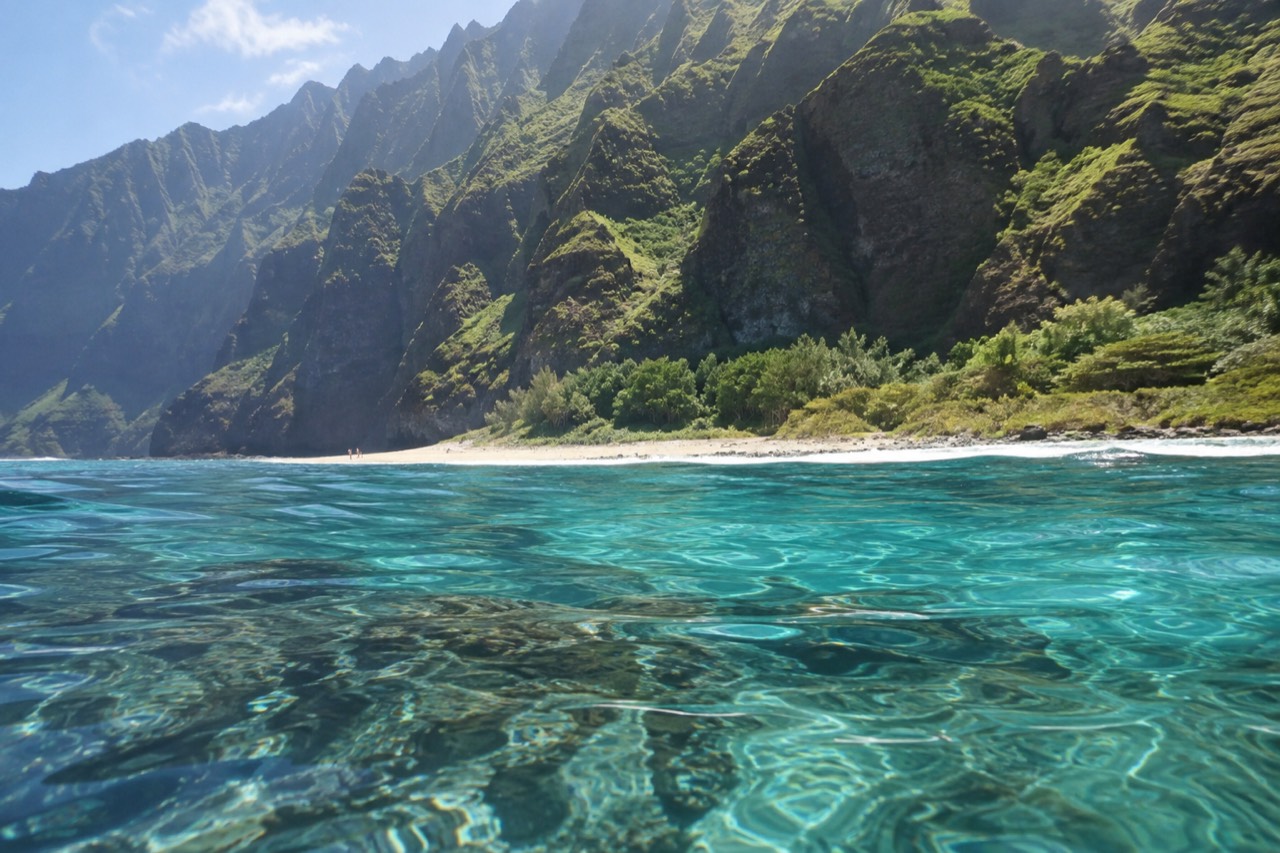
The snorkel stop is the part of a Napali Coast boat tour people remember longest, and the part most often wasted. A tour that costs from $190 to $361 per person on this coast gives you roughly 30 to 60 minutes in the water, chosen by the captain on the day. Fogg a mask, drift past the boat, or smear on the wrong sunscreen, and that window closes fast. This page walks through the mistakes that matter, the Hawaii state rules that apply in the water, and what your crew will brief you on before you jump in.
What Should You Avoid When Snorkeling?
Avoid touching coral or marine life, standing on the reef, chasing animals, using sunscreen with oxybenzone or octinoxate, snorkeling alone or far from the boat, and ignoring the diver flag rules. Hawaii law sets hard distances around monk seals and turtles, and the reef itself is easily damaged by a single fin kick or an outstretched hand.
The biggest errors fall into a few repeating groups, and almost all of them are preventable with a minute of thought before you get in. Guests stand on coral because they get tired and the reef looks solid. It is not. Coral is a living animal colony, and a single footstep or fin kick can break decades of growth. The same goes for grabbing the reef to hold position: use your fins and your float, not the reef.
The second group is wildlife. Turtles and reef fish are tempting to chase for a photo, but Hawaiian green sea turtles are protected under state law and the federal Endangered Species Act, with no open season, and monk seals carry recommended viewing distances of 50 feet, rising to 150 feet for mothers with pups. The third group is drift. Currents along any coast can move you faster than you notice while your face is down, which is why the flag rules and the boat matter so much.
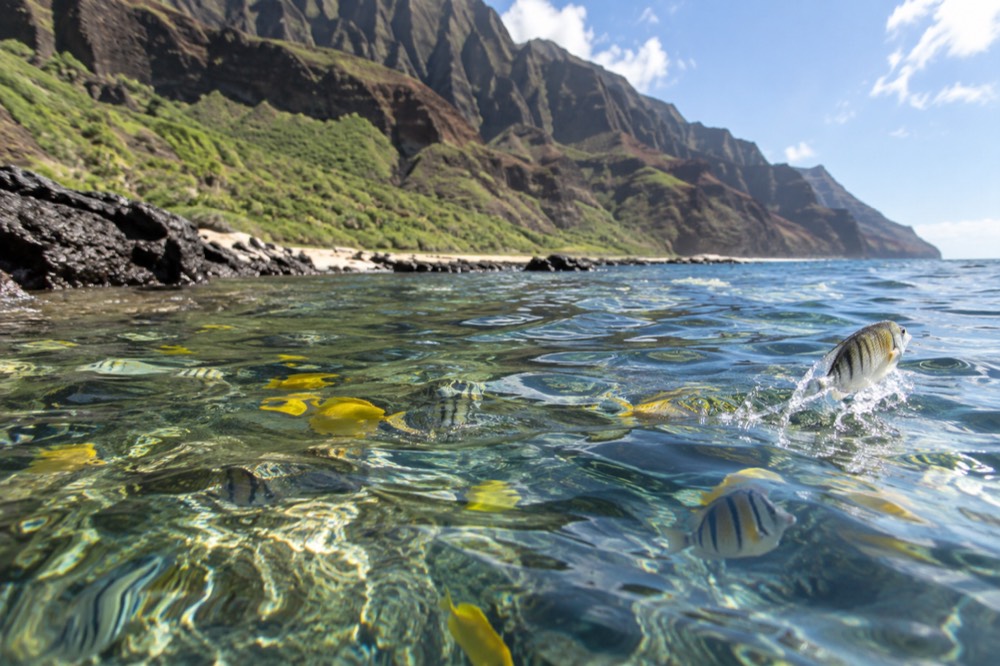
Here is the short list of what goes wrong most often, and the fix for each:
| Mistake | Why it matters | The fix |
|---|---|---|
| Standing or kneeling on coral | Breaks living coral that takes decades to regrow | Stay horizontal, float, kick gently |
| Touching or chasing turtles and fish | Turtles are protected, harassment is illegal | Watch from a distance, no contact |
| Getting close to monk seals | 50 feet recommended, 150 feet for mothers with pups | Back away, let the seal move first |
| Snorkeling away from the boat or flag | Currents drift you faster than you feel | Stay within sight of the boat and crew |
| Full-body fish feeding | Discouraged, changes fish behavior | Watch, do not feed |
| Panicking in shallow water | Most incidents happen in calm conditions | Float on your back, signal the crew |
If you are still choosing the tour itself, the snorkel products on this coast differ mainly in boat type and meal package, and the three below cover the spread: a sailing catamaran with two meals, a luxury sail, and a power catamaran with lunch.
What Do First Timers Get Wrong?
First timers most often get the gear wrong: a mask strap pulled too tight, a snorkel they never test before the stop, and fins that fight their kick. They also underestimate how tiring swimming against even a mild current is, and how quickly 45 minutes passes. Test everything on the boat, not in the water.
The mask is the classic failure. Almost every fogging and leaking problem traces back to strap tension and hair caught in the skirt, not to the mask itself. The strap should sit high on the back of your head, snug but not tight, and the skirt should seal on clean skin. Pulling the strap harder to fix a leak usually makes it worse, because it warps the skirt and opens the seal at the corners. Test the seal on dry land: press the mask to your face without the strap, inhale gently through your nose, and see whether it holds on with no hands.
Fins are the second one. Rental fins are sized generously, and a fin that slips off mid-swim is a genuine hazard when you are 100 yards from the boat. Snug but not numb is the rule, and a fin full of sand inside the foot pocket will rub a blister in twenty minutes. Practice your kick on the surface before you head off: a slow flutter from the hip, not a bicycle kick from the knee, which exhausts you and stirs sand onto the reef below.
The third mistake is time management. The captain picks the spot and the clock starts when the first guest enters the water. First timers spend ten of their forty five minutes adjusting gear at the ladder. Get the mask sorted, get the fins on, get in, and the stop feels twice as long. If you want a deeper comparison of the actual products, our breakdown of the best snorkel tour on the Napali Coast covers how the operators differ, and the sailing option can be checked here too: Check availability.
What Should You Never Touch?
Never touch coral, monk seals, turtles, or any marine life, and never take anything living or dead from the water. In Hawaii's Marine Life Conservation Districts the taking of fish, shells, coral, algae and even non-living habitat material is restricted or prohibited outright, and monk seals are fully protected at all times.
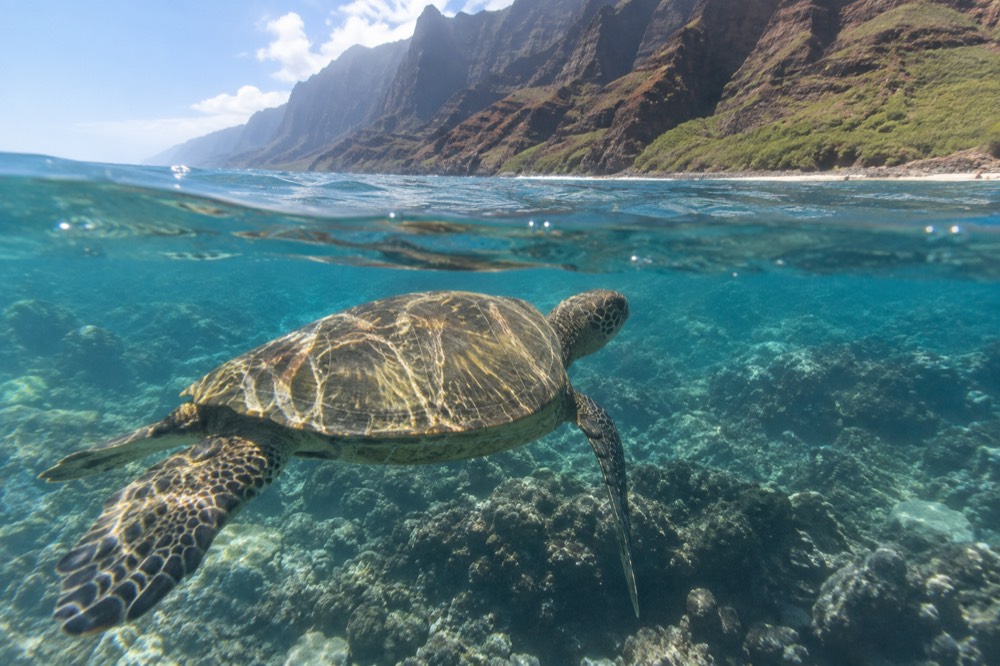
The reef is the obvious one, but the law goes further than courtesy. Under Hawaii Revised Statutes and the state's marine managed area rules, it is unlawful to molest, kill, capture or possess a Hawaiian monk seal at any time, and the Division of Aquatic Resources publishes recommended viewing distances of 50 feet for seals and 150 feet for mothers with pups. Turtles get the same protection in practice: Hawaiian green sea turtles have no open season, and federal Endangered Species Act rules stack on top of the state ones. The state's own guidance is worth reading before your trip, and the monk seal protections are published by the Division of Aquatic Resources.
The subtler rule is the no-take one. In a Marine Life Conservation District, taking any living material, fish, eggs, shells, corals, algae, or non-living habitat material is generally restricted or prohibited. Even where a Napali snorkel stop falls outside a district boundary, the habit matters: a pocketful of shells or a broken piece of coral is a piece of the reef removed, and the fish feeding question is settled too. Fish feeding is prohibited in some conservation districts and discouraged everywhere, because people food is not part of any reef's natural diet and it trains fish to swarm swimmers.
One more thing worth knowing before you book: the tour you choose shapes how much time you actually get in the water, and the six hour sailing option from Port Allen is built around a generous stop.
What Sunscreen Is Banned In Hawaii?
Sunscreens containing oxybenzone or octinoxate cannot legally be sold or distributed in Hawaii without a prescription, under Act 104, effective since January 1, 2021. Kauai has no separate county ordinance, so the statewide chemical ban is the rule that applies on this island. Bring a mineral sunscreen with zinc oxide or titanium dioxide.
The practical version is simple: whatever you buy in a shop on Kauai will already comply, because retailers cannot stock the banned chemicals. The mistake happens when you pack a bottle from home. Plenty of mainland brands still contain oxybenzone or octinoxate, and the law as written prohibits the sale, offer for sale, or distribution of those products without a prescription from a licensed healthcare provider. The text of Act 104 is published by the Hawaii State Legislature if you want the exact wording.
Two notes that travel writing often gets wrong. First, Kauai County has not passed the stricter mineral-only rule that Maui County adopted, so on Kauai the narrower statewide chemical ban is what applies. Second, the ban is on sale and distribution, not on possession, but the point of the law is reef health and your snorkel stop is exactly where it matters. A mineral sunscreen, applied before you board and reapplied after the swim, avoids both the legal question and the greasy film on the water around the swim step.
How Do You Avoid Drifting?
You avoid drifting by staying within 100 feet of the diver's flag, keeping the boat in sight, and checking your position against it every minute or two. Hawaii rules require snorkelers to remain within 100 feet of the flag in ocean waters, and vessels other than your own must stay 100 feet away from it. The flag is your anchor point, use it.
The mechanics of drift are simple and easy to miss with your face in the water. A current of one knot, which is nothing dramatic, moves you 100 feet in about a minute. That is the full legal radius of your flag zone, gone, while you are watching a turtle. The fix is a habit, not strength: pick a fixed reference, the flag, the boat, or a crew member on the surface, and glance up on a rhythm. Every ten kicks, look. If the reference is growing, swim back before it grows more.
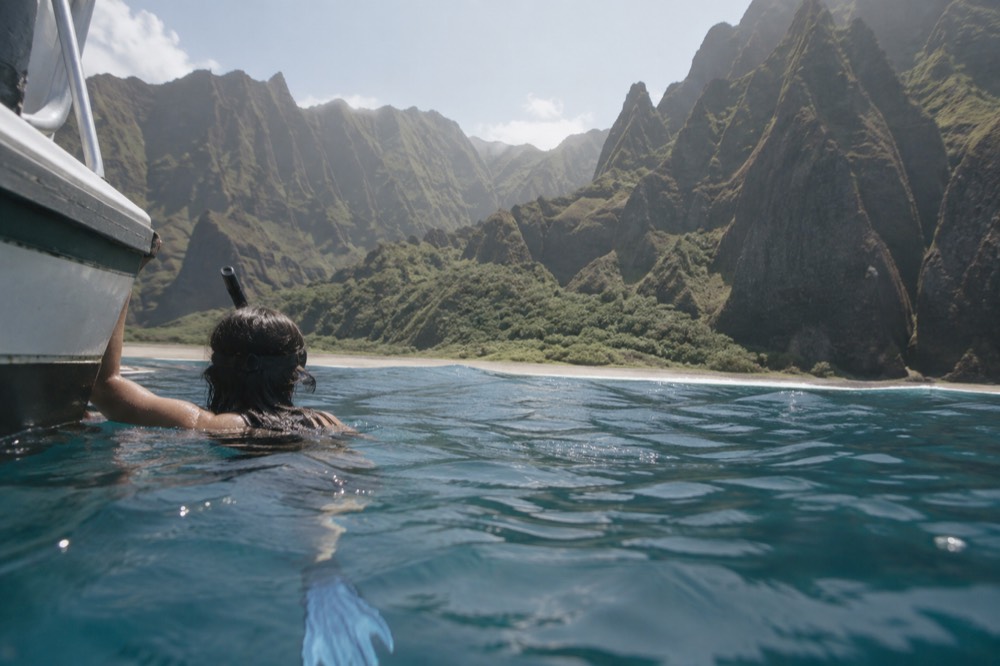
The legal frame is worth knowing because it also protects you from other vessels. Under the state's snorkeling and diving rules, anyone snorkeling in navigable waters must display a diver's flag at least 12 by 12 inches, snorkelers must stay within 100 feet of the flag in ocean waters, and vessels must keep 100 feet away. On a tour boat the crew handles the flag, but the 100 foot radius is yours to respect. The Division of Boating and Ocean Recreation publishes the flag and distance rules, and they apply to the Napali stop exactly as written.
| Drift control habit | What it does | How to build it |
|---|---|---|
| The ten kick glance | Catches drift before it becomes a swim | Count kicks, look up, repeat |
| Stay inside the flag radius | Keeps you inside the legal 100 feet | Check the flag's bearing every minute |
| Swim up current first | Lets the current return you to the boat | Ask the crew which way it runs |
| Surface float rest | Beats fighting tired arms mid-stop | Float on your back, breathe, then go |
| Crew signal check | Gets help before panic sets in | Learn the whistle and hand signals at the ladder |
One honest note: on this coast the captain picks the snorkel spot on the day, typically a sheltered reef or cove where conditions allow safe access, and no operator guarantees the stop at all. It is always conditions permitting, and the crew decides once they see the water that morning, not before. That is exactly why the in-water habits matter: when the stop happens, it is often the only one you get.
What About Eating Beforehand?
Eat a light meal one to two hours before boarding, take any motion sickness tablet early enough for it to work, and skip alcohol before the swim. Meclizine takes about two hours to reach effect and lasts about eight, so a tablet swallowed at the dock does nothing for the first stretch of the ride.
The timing detail is where people lose the day. Oral motion sickness medicines need lead time: meclizine at 25 to 50 mg has an onset of about two hours and a duration of about eight, and dimenhydrinate is similar at around two hours to onset. The scopolamine patch is slower still, applied at least four hours before it is needed and delivering roughly 1 mg across three days. If the boat leaves Port Allen at 8 a.m. and you swallow a tablet at 7:45, the medicine is doing nothing while the boat crosses the open stretch to the coast.
Food is the quieter half of the question. An empty stomach invites nausea on a moving boat, and a heavy plate of eggs and bacon invites it differently. Something light an hour or two before boarding is the reliable middle, and most tours on this coast actually solve the problem for you: breakfast is included on many morning products, served on the outbound leg after the roughest water. The snorkel stop usually comes after that, once your stomach has settled. Alcohol is the one to cut entirely: it worsens both seasickness and the cold, and it degrades exactly the swimming judgment the rest of this page is about.
What If Your Mask Fogs?
Mask fog is almost always a film problem, not a gear problem. Spit, rub, and rinse works, commercial defogger works, and a mask that fogs repeatedly is usually one with sunscreen or skin oil on the inside of the glass. Clean the inside of the lens before the tour, not during it.
The science is unglamorous. Fog forms when microscopic droplets condense on tiny particles and oils on the glass, so the fix is to break the surface tension of that film. The old spit and rub method does exactly that, and every crew keeps a defog bottle at the swim step for the same reason. What does not work is spitting once and never again: sunscreen on your fingers transfers straight to the lens, so wash your hands after applying it, and rinse the mask in fresh water between uses rather than letting the film build.
A new mask, or a rental that has been used all season, benefits from a proper pre-clean: a drop of dish soap on the inside of the glass, rubbed with a fingertip and rinsed, removes the manufacturing residue or accumulated grime that makes fog persistent. Then store it out of the sun, because a hot lens fogs faster on a cold face. If the mask fogs mid-swim, do not clear it by flooding: lift the bottom skirt, let a little water in, swish, and blow it out with the standard clear technique the crew demonstrates at the ladder.
The Amelia K tour out of Port Allen is a good example of how the stop fits the day: a five hour power catamaran trip with lunch included, rated 4.9 from 2050 reviews, from $227.13 per person, with snorkelling and sea caves when conditions allow.
What Does The Crew Brief You On?
The crew briefs you on entry and exit at the ladder, the snorkel boundaries and flag, the current direction, wildlife rules, and the signals for help. Listen to all of it, even the parts that seem obvious, because the brief is where you learn the day's specific conditions, and those change every single trip.
The brief happens at the swim step, usually two minutes, always worth your full attention. It covers the mechanical parts, how to enter without kicking the person below you, how to climb the ladder with fins on, where to hang the mask and snorkel. It covers the boundaries: the flag position, the edges of the safe zone, the current's direction, and the time limit, which the crew tracks with a headcount. And it covers the signals: a whistle means come back, a raised fist means stop and look, a waving arm means the boat needs you now. The guests who have the best stops are the ones who treat the brief as information rather than a formality.
| Brief item | What you should do with it |
|---|---|
| Entry and exit technique | Enter feet first unless told otherwise, clear the ladder zone |
| Flag and boundary | Fix the flag's bearing before you leave the boat |
| Current direction | Swim up current first, drift back |
| Time limit and headcount | Watch for the recall whistle, come back on the first call |
| Wildlife distances | Keep 50 feet from seals, give turtles room |
| Signals | Learn the whistle and the raised fist before you get in |
Two habits make the brief work. First, ask the one question you actually have, right there, where the answer is specific to that day and that reef. Second, when the recall whistle sounds, come back on the first call, not the third: the headcount is how the crew keeps everyone accounted for, and every minute of delay is a minute the whole boat waits. If you are planning the wider trip, our Napali Coast snorkel tours guide compares the operators in detail, and Napali Coast Boat Tours covers the full roster from both west side harbours.
The short version of this whole page: touch nothing, stay near the flag, sort your gear before the water, use mineral sunscreen, eat light, and listen at the ladder. Do those six things and the snorkel stop delivers what the rest of the coast promises.
Common Questions About Snorkeling On The Napali Coast
What To Avoid When Snorkeling?
Avoid touching coral and marine life, chasing animals, banned chemical sunscreens, drifting past the flag, and skipping the crew brief. Hawaii law protects turtles and monk seals with fixed distances, requires snorkelers to stay within 100 feet of the diver's flag, and restricts taking anything living from the water.
Is snorkeling on a Napali Coast tour guaranteed?
No. Every operator on this coast sells the snorkel stop as conditions permitting, and the captain decides on the day once the water can be seen. Some tours also rotate their products through the year, so check the live listing for what runs when you visit.
What sunscreen can I legally use in Hawaii?
Any sunscreen that does not contain oxybenzone or octinoxate. The statewide ban on selling and distributing those chemicals has applied since January 1, 2021, and Kauai has no stricter county rule. Mineral sunscreens with zinc oxide or titanium dioxide are the safe choice.
How close can I get to turtles and monk seals?
Keep about 10 feet from sea turtles and at least 50 feet from monk seals, rising to 150 feet for a mother with a pup. Turtles are protected with no open season, and monk seals are fully protected at all times under state and federal law.
What if I get tired or panicky in the water?
Float on your back, which needs almost no effort, and signal the crew. The crew watches the water the whole stop, carries rescue gear, and would rather collect you early than late. Panicking while upright in the water is the pattern behind most incidents, and floating breaks it.
Do I need to be a strong swimmer?
You need to be comfortable in deep water and able to swim, but not fast. Fins do most of the work, flotation is usually available on request, and the stop happens in a sheltered spot the captain has chosen for that day. If deep water worries you, say so at check in so the crew can keep an eye out.