Is It Common To See Sharks While Snorkeling On Kauai?
A calm, fact-based answer to the shark question on Kauai snorkel tours: what lives in these waters, how often snorkelers actually see one, and what the crews do about it.
Is It Common To See Sharks While Snorkeling On Kauai?
The shark question arrives before almost any other on a Kauai snorkel tour page, and it deserves a straight answer rather than a breezy dismissal. The short version: sightings happen, they are uncommon, and the species a snorkeler is likely to encounter in Hawaiian nearshore water are reef species that pose essentially no threat to a person floating on the surface. The genuine in-water risk in Hawaii is the ocean itself, and the state's own injury data says so plainly. This page works through the question the way a good boat captain would: what is in the water, how often it is seen, what the crew does, and what actually deserves your attention.
Do You See Sharks Snorkeling On Kauai?
Yes, occasionally, and almost never in a way that matters for your safety. Snorkelers on Kauai sometimes report seeing a reef shark resting under a ledge or cruising a reef flat, and those encounters are typically brief, calm and at a distance. Attacks on snorkelers in Hawaiian waters are rare enough that they make news precisely because they are news. The thing that genuinely harms snorkelers in Hawaii is the water itself, not what swims in it.
The distinction matters because fear of sharks is vivid and fear of the ocean is abstract. Hawaii Department of Health data for 2019 to 2023 show that 91 percent of snorkeling drowning victims were visitors, and ocean drownings accounted for 83 percent of all drownings in the state. Those are the numbers that describe what actually goes wrong for people in the water here, and none of them involve teeth. A snorkeler who swims within their ability, stays near the boat's flagged area and listens to the crew has already addressed the overwhelming majority of the real risk.
Shark sightings, when they happen, tend to be the opposite of the movie version. Reef sharks in Hawaii spend much of the day resting in caves and under ledges, and a passing snorkeler is more likely to startle the shark than the reverse. Guides across the islands describe the same pattern: the animal either holds position or slides quietly away, and the snorkeler gets a story rather than a scare.
That is also why the question rarely changes a booking. The in-water portion of a Napali Coast boat tour is short, usually 30 to 60 minutes at a single stop, in water the captain has chosen for calm conditions that day, with crew watching the water the whole time. If you are weighing whether to book at all, the pages on the best snorkel tour on the Napali Coast and what to avoid when snorkeling cover the decisions that actually matter, and the three tours below are a solid shortlist for a first trip.
What Sharks Live In These Waters?
The sharks most associated with Hawaiian nearshore reefs are reef species, primarily white tip reef sharks, which rest in caves by day and hunt at night, plus occasional black tip reef sharks in shallower water. Offshore and deeper, Galapagos and sandbar sharks appear around the islands. None of the reef species treats a snorkeler as prey, and the encounters snorkelers report are overwhelmingly passive and brief.
White tip reef sharks are the classic Hawaiian sighting, and their behavior explains why they are harmless to a swimmer. They are small, typically in the five to six foot range, they hunt at night, and during the day they lie motionless on the bottom or under ledges. A snorkeler passing overhead is neither food nor threat. Black tip reef sharks, when seen, tend to move away from people in shallow water. The larger pelagic species, including tiger sharks, exist in Hawaiian waters but are associated with deeper offshore habitat, murky harbor mouths and dawn and dusk activity, which is precisely where tour snorkel stops are not.
The honest caveat is that this site's verified sources do not carry a per-species sighting count for Kauai, and no number will be invented here. What the sources do establish is the legal and ecological frame around everything a snorkeler might see, and that frame is worth knowing before you get in. Hawaii protects its marine life seriously, and several of the animals you are far more likely to meet than a shark carry strict approach rules.
| Marine life | Legal approach distance | Who it applies to |
|---|---|---|
| Hawaiian monk seal | 50 feet, 150 feet for mothers with pups | Everyone, on land or in water |
| Sea turtles (honu) | 10 feet | Everyone, on land or in water |
| Hawaiian spinner dolphins | 50 yards by vessel, within 2 nautical miles of the main islands | All vessels and swimmers |
| Humpback whales | 100 yards by vessel, 1,000 feet by aircraft | All waters within 200 nautical miles of Hawaii |
Those distances come from the state Division of Aquatic Resources and from federal rules, and they are enforced, not advisory. The monk seal and turtle distances are published by Hawaii DLNR's Division of Aquatic Resources, and the spinner dolphin rule is codified at 50 CFR 216.20. Turtles, in particular, are the animal you will almost certainly see on a Kauai snorkel stop, and the rule is simple: look, never touch, and give them the ten feet the law asks for.
How Often Do Snorkelers See One?
Rarely, on any given tour. Most Kauai snorkelers never see a shark at all, and the ones who do usually get a distant, seconds-long look at a resting reef shark. There is no verified per-tour sighting rate for this coast, and any percentage you read elsewhere should be treated with suspicion. What can be verified is what actually puts snorkelers in hospital statistics, and it is not shark bites.
The absence of a number is itself the finding. No state agency and no operator on this roster publishes a shark sighting rate for Napali Coast snorkel stops, and a site that invents one is guessing dressed up as data. What can be said from the record is directional: reef sharks are seen on these tours some days and not most days, the sighting is usually a single animal, and the encounter almost never interrupts the swim.
The numbers that do exist point somewhere else entirely. The Hawaii Department of Health's water safety plan reports that snorkeling is the leading activity among ocean drowning victims in the state, and that visitors, not residents, account for the overwhelming share. A 2025 summary of the Snorkel Safety Study found that rapid-onset pulmonary edema, a condition that can affect experienced swimmers and first-timers alike, is a common factor in Hawaii's snorkel-related drownings. The practical translation for a nervous snorkeler: fitness, hydration, a well-fitting mask and honest self-assessment matter far more than the contents of the food chain.
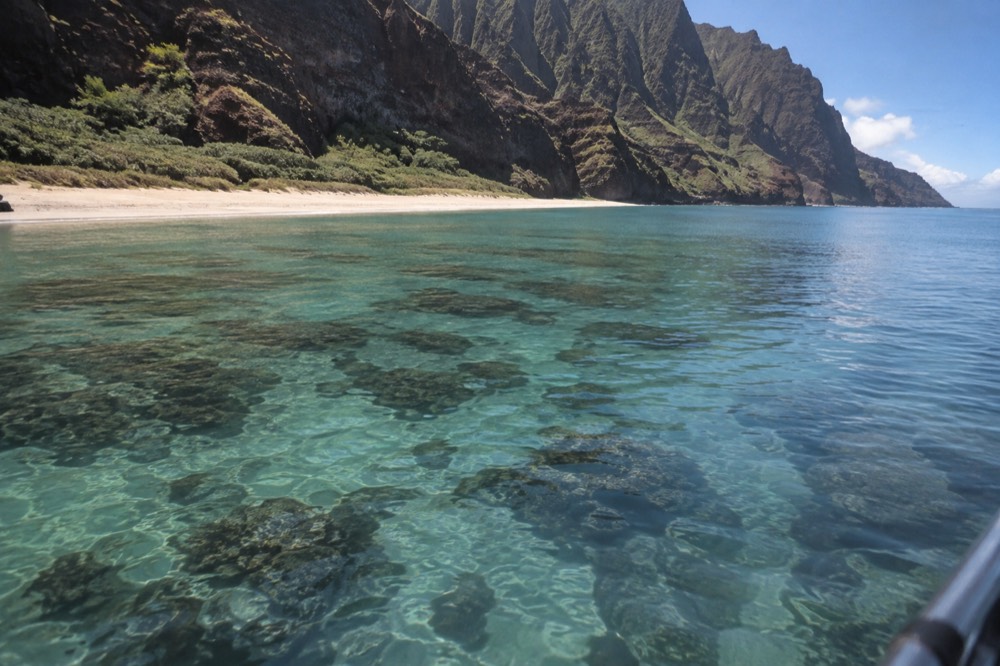
There is also a selection effect worth naming. Boat crews choose the day's snorkel location from the morning's conditions, favoring protected, clear, calm water, which is exactly the habitat where a large shark is least likely to be hunting. The stops that get skipped in winter are the exposed ones, and the stops that run are the sheltered ones. You are not swimming in a random patch of ocean, you are swimming in a spot a professional judged safe that morning.
What Do The Boat Crews Do?
Crews manage the water before anyone gets in: they pick the site from that morning's swell and visibility, brief the group on boundaries and hand signals, post a watch on the surface, and fly the diver's flag the law requires. If something large does appear, the standard response is a calm recall to the boat, and the swim simply ends early. None of this is improvised, it is the routine.
The legal backbone is the flag. Under Hawaii Administrative Rules 13-245-9, snorkelers must display a diver's flag at least 12 by 12 inches, remain within 100 feet of it in open ocean, and other vessels must keep 100 feet clear. The Division of Boating and Ocean Recreation publishes the rule, and every licensed operator on this coast follows it as a matter of course. The flag is what turns a patch of ocean into a managed swim area.
Around the flag, the crew's routine is consistent across the operators on this roster. The captain selects the stop based on the day's conditions rather than a fixed schedule. The briefing covers where you may swim, how to signal, and how to get back aboard. A crew member watches the water throughout the swim. If a monk seal hauls out nearby, if jellyfish drift in, or if anything about the water changes, the swim is shortened or moved, and the guests are told why. The same discretion that makes sea cave entry conditions permitting on the boats themselves governs the snorkel stop: the captain decides on the day, not in advance.
The tours themselves differ mainly in boat format, which changes how the snorkel stop feels. A raft carries a small group close to shore and anchors in tighter water; a catamaran carries more people and tends to anchor in a broader bay. The table below shows the snorkel-carrying products on this site's roster side by side, with every price and rating taken from the verified listing data.
| Tour | Boat type | Duration | Snorkel stop | Rating and reviews | From (per person) |
|---|---|---|---|---|---|
| Na Pali Coast Deluxe Power Catamaran Tour | Power catamaran | 4 hours 30 minutes | Yes, conditions permitting | 4.9 from 157 reviews | $275 |
| Na Pali Coast Power Catamaran | Power catamaran | 4 hours 30 minutes | Yes, conditions permitting | 5 from 811 reviews | $274.93 |
| Na Pali Coast Super Raft Snorkel Adventure | Rigid-hull inflatable raft | 4 hours 30 minutes | Yes, conditions permitting | 4.8 from 1723 reviews | $235 |
| Na Pali Raft Snorkel Adventure | Rigid-hull inflatable raft | 5 hours 30 minutes | Yes, conditions permitting | 4.8 from 1656 reviews | $217 |
| Deluxe Na Pali Snorkel Cruise aboard Lucky Lady | Power catamaran | 5 hours 30 minutes | Yes | 4.7 from 1639 reviews | $233.73 |
Every one of these carries free cancellation, which matters for a nervous swimmer deciding whether to commit: you can book the day and still walk away with a refund if you change your mind within the operator's window.
Where Do Tours Anchor To Snorkel?
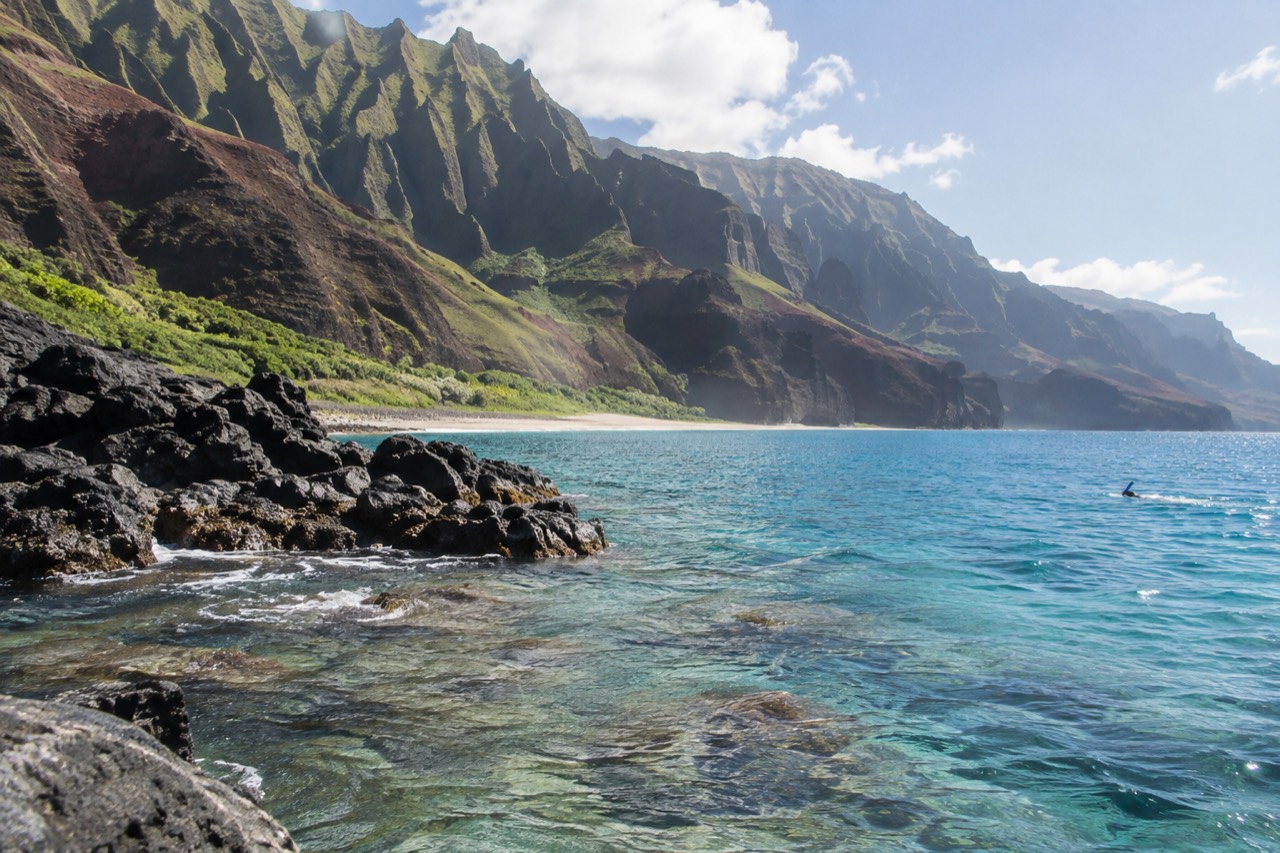
Napali Coast tours anchor at sheltered spots chosen that morning for calm water and visibility, with Nu'alolo Kai the best-known stop, reachable in the calmer months, roughly April through October. Winter tours often drop the snorkel stop entirely or move it, because the same northwest swells that close the sea caves make the exposed stops unsafe. The captain decides on the day.
Nu'alolo Kai is the name that comes up most, and for good reason. It is the site of an ancient Hawaiian settlement with terraces and stone walls visible above the beach, and the reef in the bay is the classic Napali snorkel: clear, protected when the swells are down, and full of reef fish and turtles. Only a short list of permitted operators may land passengers there, and the landing itself is scheduled far more often than it is delivered, because swell governs everything on this coast.
The seasonal pattern is real and specific. Operators on this coast describe Nu'alolo Kai as accessible mainly in the calmer months, roughly April through October, when northwest swells settle enough for safe access. From late October through the winter, afternoon snorkelling largely disappears from the product mix, and some winter tours are sold as sightseeing only, with the snorkel stop and even lunch off the agenda because conditions are too unpredictable to promise them. That is not a sales trick, it is the honest shape of the coast's year.
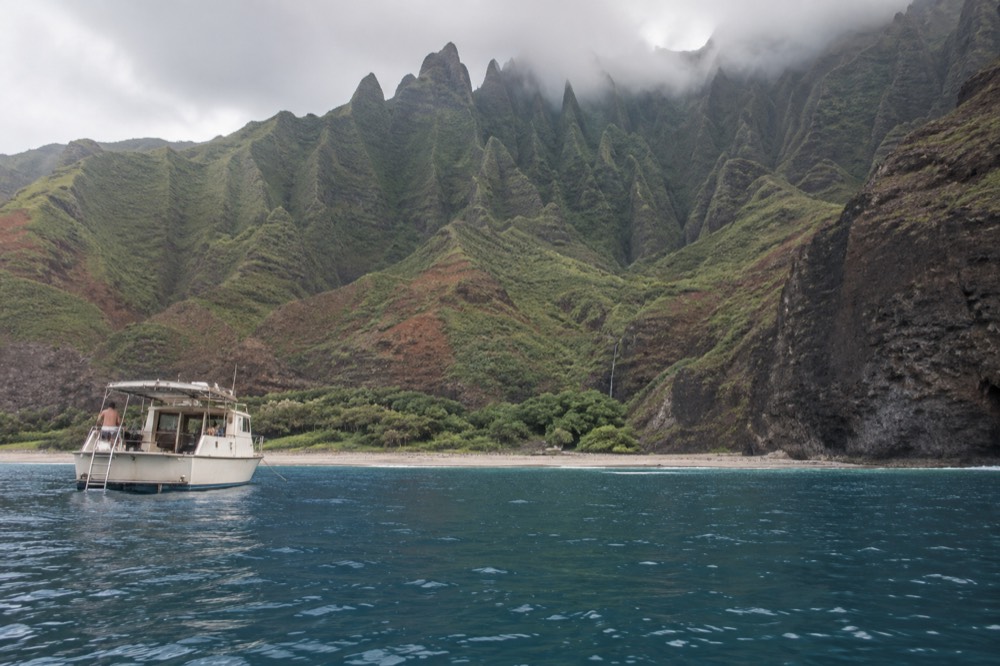
For a snorkeler thinking about sharks, the location logic is reassuring. A sheltered bay with a reef is where reef fish and turtles concentrate, and where the water is clear enough for everyone, including any large animal, to see each other from a distance. Murky water and harbor mouths are where trouble historically concentrates in Hawaii, and tours do not anchor there. If you want to dig into the stop itself, the guide to Napali Coast snorkel tours breaks down which products actually include the water time.
The deluxe power catamaran product is a good example of the format: it runs 4 hours 30 minutes from Kikiaola, includes a snorkel stop when conditions permit. allow, carries snacks, and is rated 4.9 from 157 reviews, from $275 per person with free cancellation.
What Raises The Risk?
The behaviors that raise in-water risk on a Kauai snorkel stop are swimming alone, swimming at dawn or dusk, entering murky water, touching or chasing marine life, and overestimating your own fitness. Tour snorkel stops structurally avoid most of these: they run midday in clear water with a flag, a group and a watch. What remains in your control is honesty about your swimming and your health.
Dawn and dusk deserve a plain explanation. Many larger sharks feed in low light, which is why the window around sunrise and sunset is the one experienced ocean swimmers in Hawaii treat with respect. Commercial snorkel tours do not swim in that window, they run in the middle of the day, which removes the factor without anyone having to think about it. Similarly, tours avoid murky outflows and harbor approaches, the other classic risk factor, because clear water is what makes the stop enjoyable in the first place.
The factors you control are the ones worth a paragraph. Swim where the crew says, inside the flagged area. Never touch, chase or corner a turtle, a seal or a fish, both because it is illegal and because a cornered animal of any species can bite. Do not feed fish, which the state discourages everywhere and prohibits in marine conservation districts, because it changes animal behavior around people. And be honest about your conditioning: the state's drowning data and the snorkel safety research both point at the swimmer's own body, not the fauna, as the thing that fails.
| Risk factor | Why it matters | Does a tour stop involve it? |
|---|---|---|
| Swimming alone | No one notices if you get into difficulty | No, group swim with crew watching |
| Dawn or dusk swimming | Large predators feed in low light | No, stops run midday |
| Murky water | Low visibility for you and for boats | No, captains pick clear sites |
| Touching or chasing animals | Illegal, and cornered animals bite | Your choice, so do not |
| Overexertion | The leading real cause of snorkel incidents | Your choice, pace yourself |
One more thing belongs here because it is the most common self-inflicted problem on any snorkel stop: a leaking or fogging mask that makes a swimmer panic. Practice with your mask in the shallows or a pool before the trip, and ask the crew to check the fit before you jump. Most of what gets reported as "nearly drowning" on a reef starts with a mask problem and a fast, shallow breathing spiral.
What Should You Do If You See One?
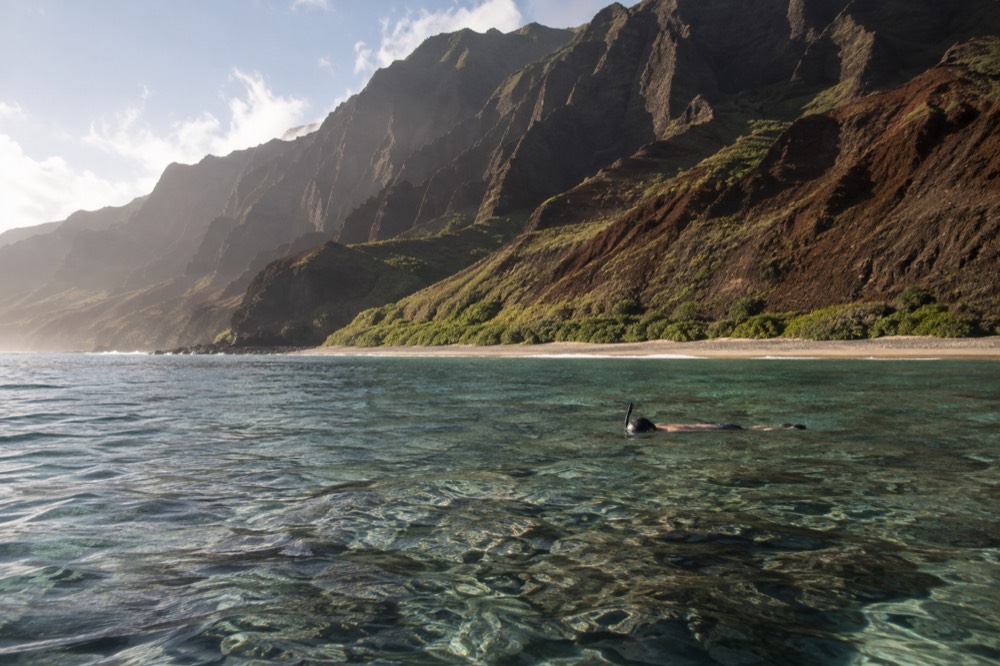
Stay calm, keep your position or back away slowly, and do not swim at it, corner it or block its exit. Watch where the animal goes, keep your body vertical and unhurried, and move calmly back toward the boat or the flagged area. If it is a reef shark resting under a ledge, the correct action is simply to look, give it space and carry on. Report it to the crew.
The mechanics matter more than the mantra. A shark that is not interested in you reads your behavior the way any wary animal does: erratic splashing looks like distressed prey, and a direct approach looks like a challenge. Calm, steady, vertical body position with even fin kicks communicates neither. If the animal approaches out of curiosity, which is the most common reason a reef shark comes near a snorkeler, facing it while backing away ends the encounter almost every time. Never grab, never touch, and never try to herd it toward anyone for a photo.
Tell the crew, every time, even after an unremarkable sighting. Crews track what is in the water at each stop across days and weeks, and a report of a shark resting under a particular ledge changes where the next group swims. It also lets the crew decide whether the stop should move, which is a judgment they make constantly for reasons far more mundane than sharks: a surge, a current, a seal hauled out on the beach.
The same discipline applies to the animals you will actually meet. Give turtles their ten feet, give a monk seal fifty, and give a mother with a pup a wide berth measured in the hundreds of feet. The state's protected species pages carry the full rules, and the short version is that every animal on this coast is better protected by law than you are, which is exactly as it should be.
Should It Change Your Booking?
Almost never. The shark question is a real feeling and a negligible statistic, and letting it steer the decision usually costs you one of Kauai's best experiences. The rational adjustments are small: book a tour with free cancellation if nerves are part of the picture, choose a calm-season date if the swim matters to you, and pick a boat format that suits your confidence in the water.
Start with the season if the snorkel is the point of the trip. The calmer months, roughly April through October, are when the sheltered stops are most reliably reachable and the water is at its clearest, and the guide to the best time to visit Kauai covers that window in detail. In winter, book knowing the snorkel stop may be dropped, and read the tour description honestly: some products are sold as sightseeing only in that season, and that is the coast telling the truth about itself.
Then pick the boat for your temperament. A nervous swimmer is often happier on a catamaran, where the platform is stable, the group is bigger and the stop is a wide, social bay. Confident swimmers who want the small-group, close-to-shore experience tend toward the rafts, which carry as few as 14 guests and get into tighter water. The raft snorkel product from Kauai Sea Tours is a good middle example: 5 hours 30 minutes, breakfast included, maximum 14 guests, rated 4.8 from 1656 reviews, from $217 per person with free cancellation.
Finally, use the free cancellation that every product on this roster carries. Book the tour, sit with the decision, and know you can back out within the operator's window. In practice most nervous snorkelers who go anyway come back with a turtle story, and the shark question dissolves in about four minutes of clear water over a living reef. The fear is worth taking seriously, and the answer to it is preparation, not avoidance. Napali Coast Boat Tours keeps every product on this roster verified so the decision you make is made on real numbers.
Common Questions About Sharks And Snorkeling On Kauai
Is It Common To See Sharks While Snorkeling?
No. Sightings on Kauai snorkel tours are occasional, not routine, and the species usually involved are reef sharks that rest by day and avoid swimmers. There is no verified per-tour sighting rate for this coast, and no operator on this roster publishes one, so treat any percentage you see elsewhere with suspicion.
What Kind Of Sharks Would I See On A Kauai Snorkel Stop?
The species most associated with Hawaiian nearshore reefs is the white tip reef shark, a small nocturnal hunter that rests in caves and under ledges during the day. Black tip reef sharks appear in shallower water. These animals do not treat snorkelers as prey, and encounters are typically brief and passive.
Is Snorkeling On The Napali Coast Dangerous?
The real risk in Hawaii's snorkel statistics is the water and the swimmer's own body, not marine life. State data show the great majority of snorkel-related incidents involve drowning, with visitors overrepresented, and the tour format itself, a short swim in a captain-selected spot with a flag and a watch, removes most of the risk factors.
What Should I Do If A Shark Swims Near Me?
Stay calm, hold a vertical position, and back away slowly without turning your back or splashing. Never touch, chase or block the animal. Move calmly toward the boat or flagged area and tell the crew what you saw so they can judge the stop.
Do Boat Crews Watch For Sharks During The Swim?
Yes. Crews brief the group, post a surface watch throughout the swim, and fly the diver's flag Hawaii law requires, which keeps other vessels 100 feet away. If anything about the water changes, the swim is shortened or moved, exactly as it would be for a surge or a current.
Can I Snorkel On A Napali Coast Tour In Winter?
Sometimes. Winter tours on this coast often drop the snorkel stop because northwest swells make the exposed bays unsafe, and some winter products are sold as sightseeing only. The stops are most reliable in the calmer months, roughly April through October, and the captain makes the final call on the day.