What To Wear On A Napali Coast Boat Tour?
A practical packing and clothing guide for Napali Coast boat tours: what to wear on a catamaran versus a raft, rash guards, footwear, sun and wind protection, and what to leave behind.
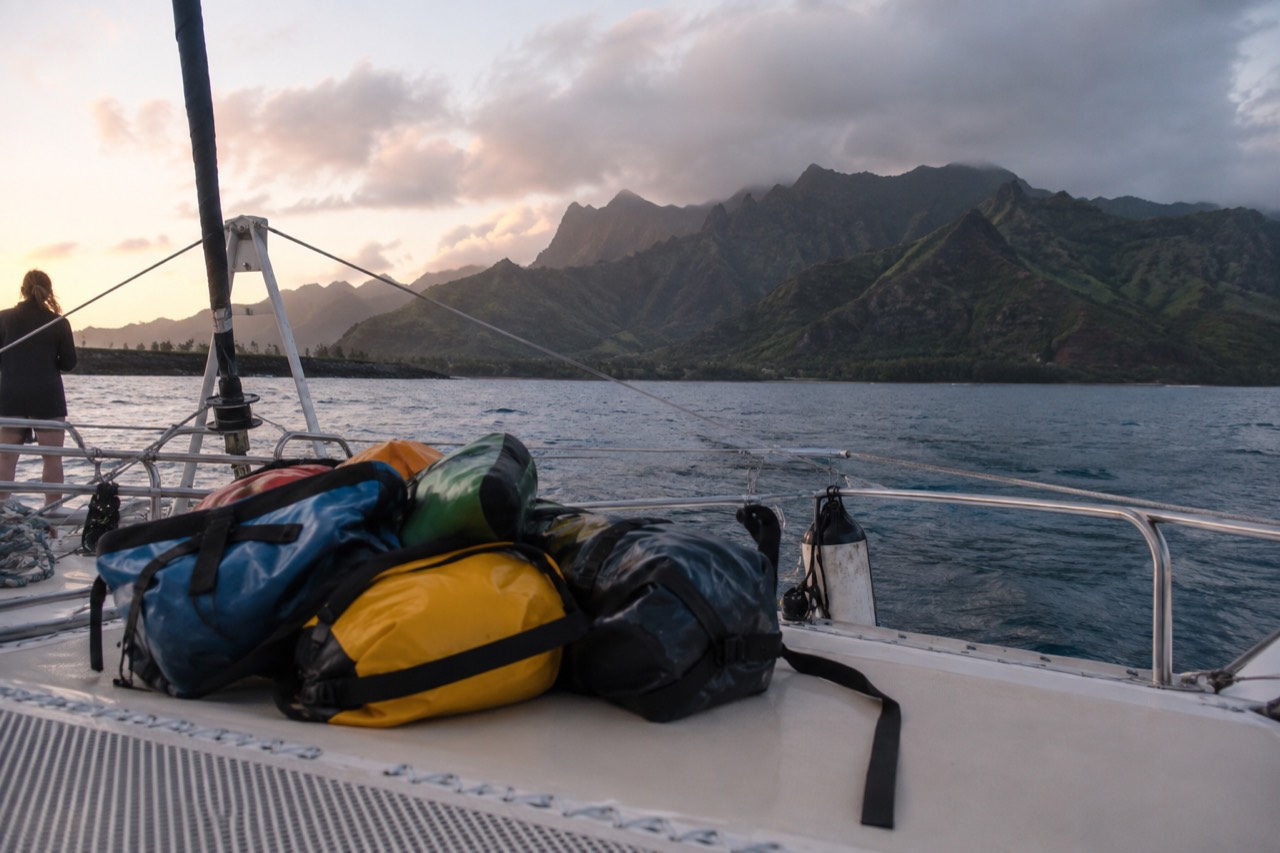
What To Wear On A Napali Coast Boat Tour?
Every Napali Coast boat tour leaves from the west side of Kauai, crosses open water, and spends hours in sun, spray, and trade wind. What you wear decides whether that is a great day or a miserable one, and the answer changes with the boat. A large catamaran keeps you mostly dry behind a cabin and shaded seating; a rigid-hull raft puts you at water level where every wave is a soaking. This guide works through the wardrobe piece by piece, for both formats, and ends with a night-before packing list.
What Should You Wear On A Napali Boat Tour?
Wear a swimsuit as the base layer, quick-dry shorts or a rash guard over it, and bring one warm layer and one dry layer in a small bag. Choose clothes that shed water rather than absorb it, because rafts soak everyone and even catamaran decks catch spray when the boat turns. Nothing you wear should be something you would mind wearing wet for five hours. That single rule filters out most bad choices on its own. Cotton is the classic mistake: it holds water, stops insulating, and takes hours to dry in the wind. Denim is worse. Board shorts, swim trunks, athletic leggings, and polyester or merino tops all behave properly on the water.
Think in layers rather than outfits. The morning run out of Port Allen can be cool and grey, the middle of the trip hot and bright, and the return leg windy and cold, especially when the boat is moving at speed and the wind chill builds. A light long-sleeve shirt you can pull on and off covers all three phases. Sunglasses with a retainer strap belong on your face from check-in onward, and a hat that fits snugly or cinches down beats a loose cap that will end up in the channel.
The tour you booked shapes the rest of this guide. The three formats below cover the practical range on this coast, from a seated dinner cruise to a full soaking raft expedition.
If you are still choosing a time of day, the morning versus afternoon question changes the clothing math too: afternoon trips run hotter and brighter, morning trips colder at the dock. And if the swell worries you, read up on seasickness on a Napali boat tour before you pick your outfit, because what you wear matters less than how your stomach handles the crossing.
What Works On A Catamaran?
On a catamaran, wear a swimsuit with a cover-up or quick-dry clothing, and keep a dry warm layer in your bag for the ride back. You will stay mostly dry, but you will sit in sun for hours with the trade wind blowing, so shade clothing and a hat carry more weight than waterproofing. Most catamaran tours include a snorkel stop where you will want to be in the water anyway. Catamarans are the stable, spacious end of the Napali fleet. Power catamarans like the Amelia K run 5-hour tours with lunch included from Port Allen, and sailing catamarans like the Lady Kailani carry up to 49 guests on snorkel and sunset versions of the same coastline. On all of them, the trampoline nets and bow areas are where spray lands, and the cabin seating is where it does not.
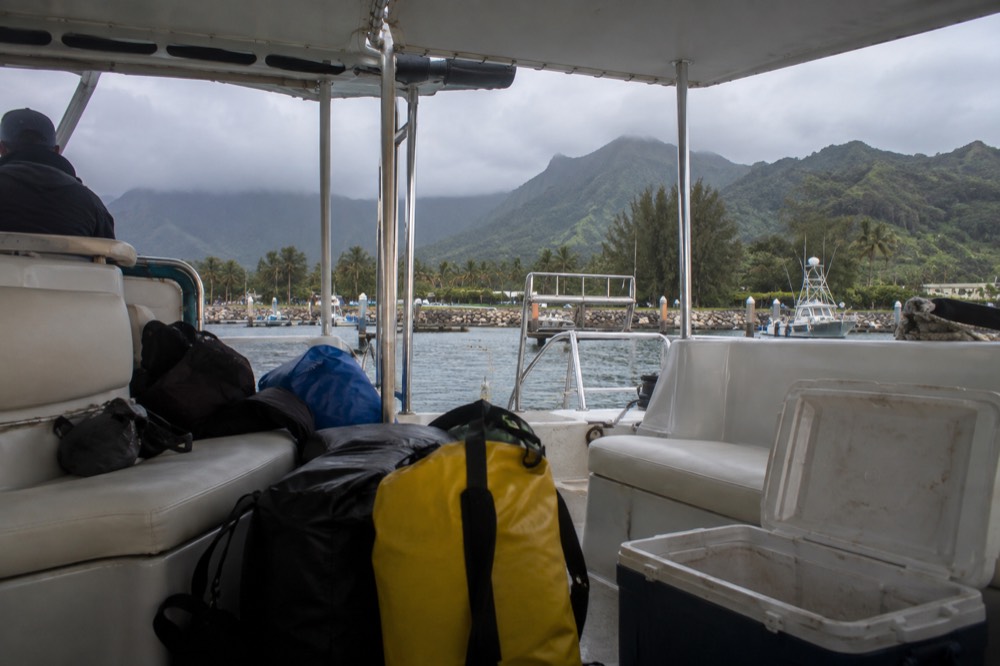
Dress for sun first. The deck reflects light off the water from below and takes direct sun from above, so shoulders and the back of the neck burn fastest. A loose long-sleeve sun shirt does more for you on a catamaran than any amount of sunscreen reapplication, and it doubles as the warm layer for the downwind return. Operators on this coast publish health guidance worth reading before you pack: Holo Holo Charters states a minimum age of 5 and notes its tours are not suitable for pregnant women, people with back or neck problems, recent surgeries, or wheelchair users, which is a reminder that a catamaran crossing is still an open-ocean ride, not a harbor cruise.
For the sunset dinner format specifically, the wardrobe shifts a step smarter but stays practical. The Na Pali Sunset and Sightsee Boat Tour runs 3 to 4 hours from Port Allen with dinner included, rated 4.7 from 1,249 reviews, from $263.82 per person. Evening trips start warm and end cool: the trade wind that felt pleasant at boarding becomes genuinely cold after sunset, so bring a fleece or windbreaker even on a bright day, and something you can sit down to dinner in without being soaked.
The Amelia K is the strongest example of the full-day catamaran wardrobe in action: 5 hours, lunch included, snorkelling and sea cave viewing when conditions allow, rated 4.9 from 2,050 reviews, from $227.13 per person. Five hours is long enough to cycle through every weather phase the coast offers, which is exactly why the layer system earns its keep on this boat.
What Changes On A Raft?
On a raft, wear only clothes that can be soaked through and stay comfortable: board shorts, a rash guard or quick-dry shirt, and a secured hat. Rafts ride at water level, punch through spray, and in summer conditions may drive through waterfall runoff at cave entrances, so everything on your body will get wet. Leave dry clothes in the car for after, not on the boat. Rigid-hull inflatable rafts are the adventure end of the Napali fleet, and the clothing brief is completely different from a catamaran. There is no cabin, no shade structure, and no dry seat. The Super Raft Snorkel Adventure from Captain J's runs 4 hours 30 minutes from Port Allen, rated 4.8 from 1,723 reviews, from $235 per person with snacks included, and its whole design philosophy is to get close: close to the cliffs, close to the caves, close to the water.
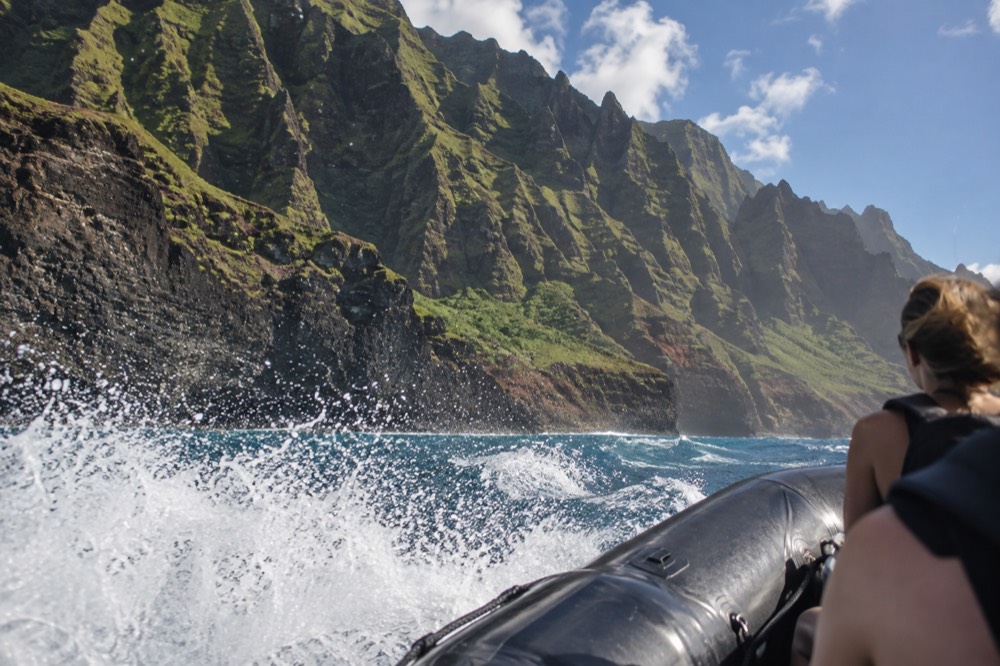
Two raft-specific rules matter. First, everything on a raft gets wet, including anything in an open bag, so use a small dry bag for the items you need to keep dry: phone, spare layer, medication. Second, sea cave entry and waterfall runs are always conditions permitting and at the captain's discretion, so you cannot dress for a guaranteed soaking, you dress for a possible one. Swimsuit under quick-dry layers is the standard formula, and a fitted rash guard beats a loose t-shirt because loose fabric flaps hard in the wind at raft speed.
The raft comparison is laid out in full in the guide to Napali Coast raft tours, including which rafts carry the smallest groups. If you want the full picture of how the two formats differ before committing your wardrobe and your back, that is the page to read.
Do You Need A Rash Guard?
A rash guard is the single most useful clothing item on a Napali tour, and on a raft it is close to mandatory. It blocks sun on the water for hours without washing off, keeps you warm when wet, and protects your torso from rubbing against deck surfaces and snorkel gear. A long-sleeve UPF rash guard replaces the entire sunscreen problem for your upper body. Reef-safe sunscreen is still legally relevant in Hawaii: state law prohibits the sale of sunscreens containing oxybenzone or octinoxate without a prescription, so whatever you buy on island will be mineral-based, which works but leaves a white film and needs reapplication after every swim. A rash guard simply removes that variable for most of your skin.
The warmth argument matters more than people expect. Water temperatures on this coast sit around 74 to 80 degrees year round per operator guidance, which feels pleasant for a swim and cold for an hour of snorkelling, especially in winter months. A long snorkel stop in a rash guard is comfortable; the same stop in a bare swimsuit has most people shivering and back on the boat early. For the full-day products, like a 5 hour 30 minute raft snorkel tour, the guard earns its space in the bag twice over.
What Shoes Should You Bring?
Wear or pack shoes that can get wet and grip a wet deck: reef walkers, water shoes, or strapped sandals. Skip flip flops on a raft, where they wash overboard, and skip anything with smooth soles, because catamaran decks and raft tubes are slick with spray all day. Most operators ask for bare feet or wet shoes aboard, and you will want real shoes for the walk from the parking lot. The honest split is between the harbour and the boat. Port Allen has a free public gravel lot and office-row check-in, so you walk a few minutes on dry ground first; Kikiaola has paid parking, with rates posted at the harbour and free parking for Hawaii residents with state ID, and the dock area has uneven surfaces where proper shoes help.
Aboard, the calculus changes. Barefoot is common on catamarans and near-universal on rafts, because wet rubber deck surfaces grip better than most shoe soles and shoes tear raft tubes. The practical answer is a pair of foldable water shoes or reef walkers that go in your bag at check-in, plus whatever you wore to the harbour staying in the car. Old sneakers beat anything expensive, and one guest's brand-new leather sandals ruined by salt water is a recurring bad review on every booking platform.
| Situation | Best footwear | Avoid |
|---|---|---|
| Catamaran deck, dry day | Barefoot or wet sandals | Leather, suede |
| Raft, any day | Barefoot or thin reef walkers | Flip flops, hard soles |
| Snorkel stop over rock or coral | Reef walkers or swim socks | Bare feet on sharp ledge |
| Port Allen gravel lot walk | Sandals or sneakers | Nothing, on hot gravel |
| Kikiaola dock and uneven surfaces | Strapped sandals or sneakers | Loose slip-ons |
What About Sun And Wind?
Plan for sun exposure far stronger than a beach day, because the water reflects UV upward while the equatorial sun hits from above, and plan for wind chill on any moving boat. A UPF long-sleeve shirt, a brimmed hat with a chin strap or cinch cord, polarized sunglasses with a retainer, and reef-safe mineral sunscreen on exposed skin covers the whole problem. Reapply sunscreen after every swim. The reflection point is the one first-timers miss. On the water you effectively burn from two directions at once, and the underside of your nose, chin, and ears takes damage that never happens on land. Zinc-based sunscreen on those surfaces plus a hat handles it.
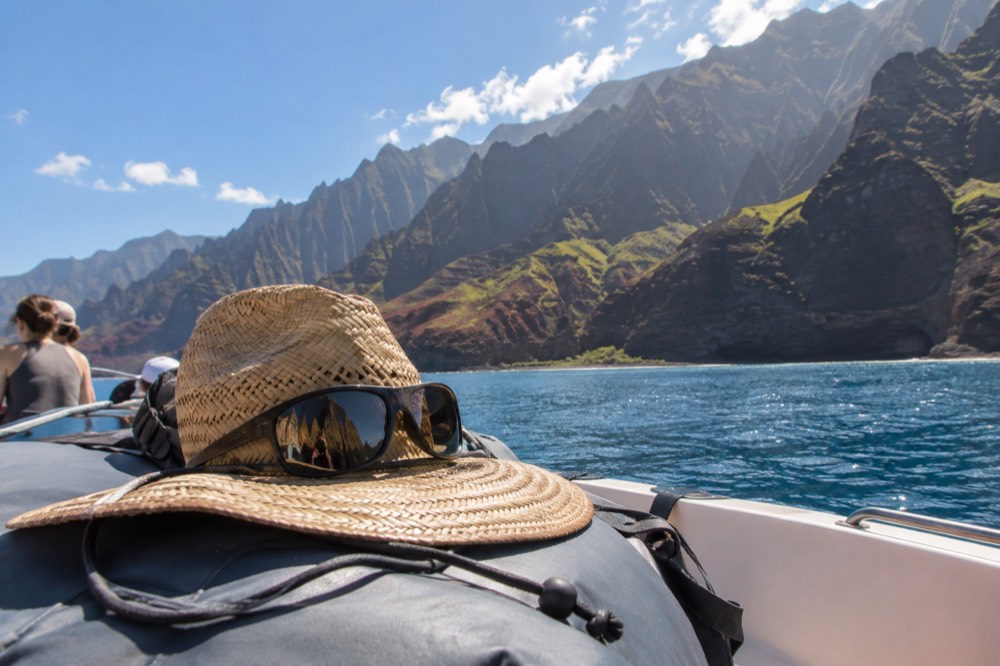
Wind is the sneaky one. The trade wind blows east to northeast across these leeward waters most days, and a boat running downwind at 20 knots creates its own apparent wind on top of that. What felt like a warm afternoon at the dock becomes a cold, noisy ride on the way home, and this is where the fleece or windbreaker in your dry bag saves the last hour of the tour. On sunset trips the effect doubles: the sun drops, the wind keeps blowing, and everyone who packed nothing borrows the crew's spare jackets. The trade wind also makes anything loose into litter, so hats need cords and sunglasses need straps.
What Should You Leave In The Car?
Leave in the car: a towel, a full change of dry clothes, dry shoes, and anything you would be upset to lose to salt water. Boats have limited dry storage, everything on deck gets spray, and the walk back to the Port Allen lot or the paid Kikiaola lot is much better in dry clothes. Valuables that must come aboard go in a sealed dry bag or stay in the car entirely. The list of things that get ruined on Napali tours is long and predictable: phones without cases, expensive cameras without housings, passports carried in back pockets, and prescription sunglasses that go overboard on the first raft wave.
Two specific cautions. First, drones: state park rules prohibit launching or landing unmanned aircraft in all Hawaii state parks without written DLNR approval, and the Napali coast is a state wilderness park, so the drone stays in the car. Second, cash and cards: check-in happens at the office row at Port Allen before boarding, so payment and ID are needed at check-in but not on the boat. A single card and ID in a zip pocket is the right load-out, everything else stays behind.
| Bring on the boat | Leave in the car | Either, your call |
|---|---|---|
| Swimsuit, rash guard, warm layer | Full dry change of clothes | Waterproof phone case |
| Dry bag with spare layer | Towel | Camera |
| Reef-safe sunscreen, hat, strapped sunglasses | Expensive jewellery, watches | Snacks, if not included |
| Water shoes or reef walkers | Dry street shoes | Motion sickness tablets |
| One card and ID in zip pocket | Drone, passport, laptop | Book or e-reader |
What Should You Pack The Night Before?
Pack the night before: swimsuit worn or laid out, rash guard, warm layer, dry bag with a spare shirt, reef-safe sunscreen, hat, strapped sunglasses, water shoes, motion sickness tablets if you use them, and one card with ID. Check in at the office row, not the dock, and arrive early enough to park, because morning departures stack up fast at both harbours. The night-before habit exists because morning departures on this coast leave early, and the drive from most lodging areas to Port Allen or Kikiaola takes longer than the map suggests. Rushing is how people forget the one item that mattered, usually the warm layer or the sunscreen.
Lay everything out in two piles: worn on the boat, left in the car. That single sort prevents the classic errors, which are bringing everything aboard and getting it all soaked, or bringing nothing aboard and being cold and sunburnt by hour two. If your tour includes meals, and many do, from lunch on the Amelia K to dinner and appetizers on the sunset products, you need no food at all. If it does not, a small snack in the dry bag is worth its weight.
| Packing item | Catamaran day | Raft day | Sunset dinner |
|---|---|---|---|
| Rash guard | Yes, long sleeve | Yes, essential | Optional |
| Warm layer | Yes, light fleece | Yes, in dry bag | Yes, non-negotiable |
| Dry bag | Small | Essential, medium | Small |
| Water shoes | Yes | Yes, thin soled | Sandals fine |
| Hat with strap | Yes | Yes, fitted | Yes |
| Towel in car | Yes | Yes | Yes |
The layering logic in this guide holds for every product on this coast, from the shortest 3-hour zodiac run to the 8-hour Ni'ihau expedition, and it is the same advice this site's Napali Coast Boat Tours roster is built around: dress for spray, pack for sun, and keep one dry warm layer for the ride home. Whatever you book, every tour on this coast carries free cancellation, so the weather call can be made with the forecast in hand rather than the calendar.
Common Questions About What To Wear On A Napali Coast Boat Tour
What To Wear On A Napali Coast Boat Tour?
Wear a swimsuit with a quick-dry rash guard or sun shirt, bring one warm layer and a spare dry shirt in a small dry bag, and wear water shoes or sandals that can get wet. On a raft expect to be soaked and dress accordingly; on a catamaran dress for hours of sun and wind instead. Add a hat with a strap, polarized sunglasses with a retainer, and reef-safe mineral sunscreen, and leave a towel and full change of clothes in the car.
Should You Wear A Swimsuit On A Napali Tour?
Yes, a swimsuit is the standard base layer on every Napali tour, including sunset cruises, because most tours include a snorkel stop and even the ones that do not involve spray and heat. Wear something over it, a rash guard, sun shirt, or cover-up, rather than showing up in beachwear alone.
Do You Get Wet On A Napali Coast Boat Tour?
On a raft, yes, thoroughly and by design: rafts ride at water level and punch through spray, and in summer conditions they may run through waterfall runoff at cave entrances. On a catamaran you stay mostly dry in cabin seating but will get wet at the snorkel stop and possibly from spray on the nets. Sea cave entry and snorkelling are always conditions permitting and at the captain's discretion.
Is It Cold On A Napali Coast Boat Tour?
It can be, especially on the return leg. The trade wind plus the boat's own speed creates real wind chill even on warm days, and after sunset the temperature drops quickly. A light fleece or windbreaker in a dry bag is the standard advice for every tour format, and guests who skip it are usually the ones asking the crew for spare jackets on the way home.
Can You Wear Flip Flops On A Napali Boat Tour?
You can wear them to the harbour, but not on the boat. Flip flops wash overboard on rafts, slide on wet catamaran decks, and are prohibited or discouraged by most operators, who generally ask for bare feet or wet shoes aboard. Pack reef walkers or strapped sandals and leave the flip flops in the car with your dry clothes.
What Kind Of Sunscreen Is Allowed In Hawaii?
Hawaii prohibits the sale and distribution of sunscreens containing oxybenzone or octinoxate without a prescription, so anything you buy on island is mineral-based, typically zinc oxide or titanium dioxide. Bring reef-safe mineral sunscreen and apply it before boarding, reapplying after every swim. A UPF rash guard covers most of your skin and reduces how much sunscreen the reef is exposed to in the first place.