What Are The Disadvantages Of A Helicopter Tour Over Kauai's Napali Coast?
The honest downsides of seeing Kauai's Napali Coast by helicopter, from cost and flight length to cancellations, noise and motion sickness, and what a boat tour does better.
What Are The Disadvantages Of A Helicopter Tour Over Kauai's Napali Coast?
A helicopter is the fastest way to see the scale of the Napali Coast. It is also the most expensive, the shortest, the most weather-dependent and the loudest option on Kauai, and most of the disadvantages people warn about are real and specific. This site sells boat tours, not flights, and that is worth saying up front: nothing on this roster is a helicopter product. The comparison below is still an honest one, because the reader weighing a flight against a boat deserves the full picture before spending several hundred dollars.
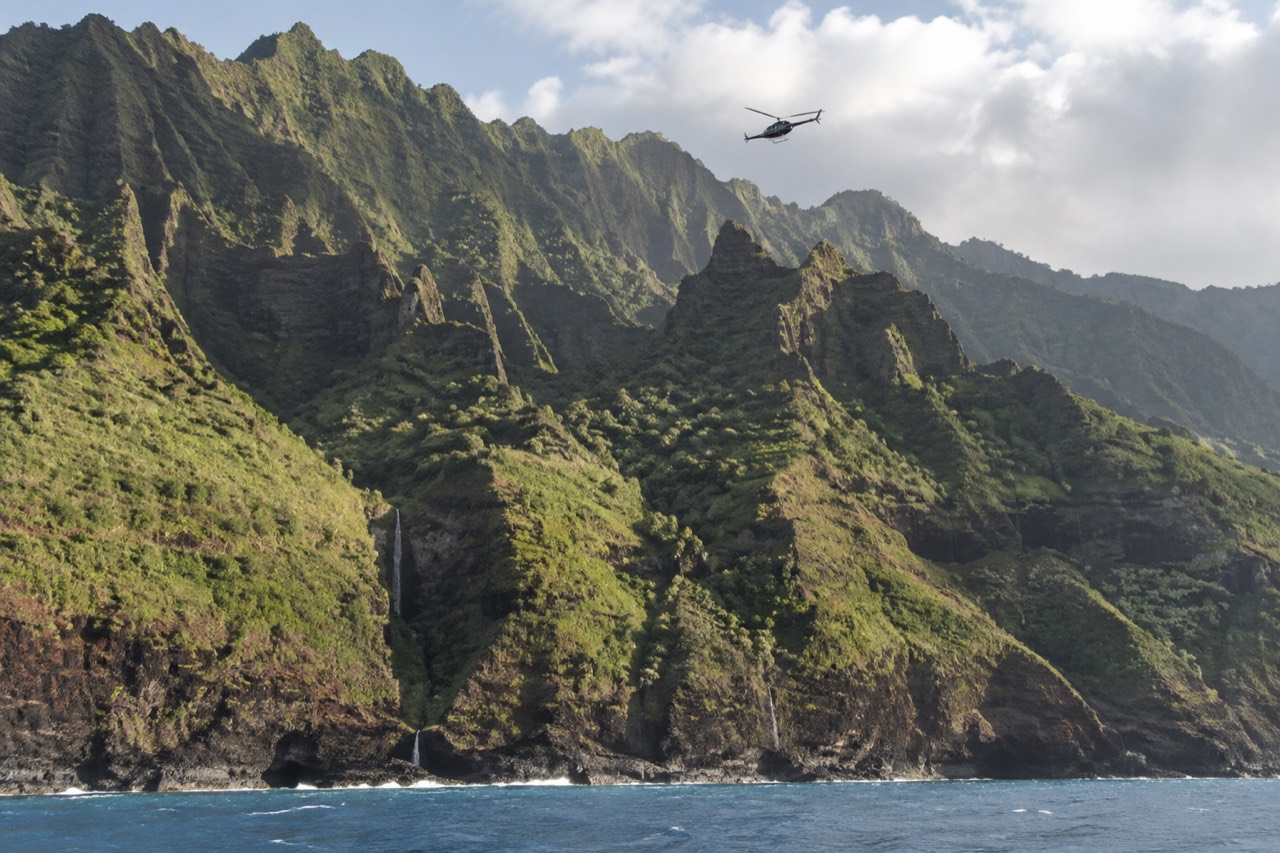
The Napali Coast State Wilderness Park covers 6,175 acres along the rugged 16-mile northwest side of Kauai, and a helicopter crosses all of it in minutes. A boat spends hours inside the same coastline, close enough to see waterfalls, sea arches and, when the swell allows, the inside of the sea caves. Neither is objectively better. But the disadvantages of the flight are worth counting before you book one.
What Are The Downsides Of A Helicopter Tour?
The main disadvantages are price, brevity, cancellation risk, noise, seating limits and motion sickness. A 45 to 55 minute Kauai flight starts around $409 to $499 per person, seats are assigned by weight, doors stay on for most tours, and low cloud or wind grounds the aircraft entirely, while a boat tour of the same coast runs longer, costs less and still sails in light rain.
Price is the first thing most people notice. Blue Hawaiian Helicopters lists its Kauai Eco Adventure 50-minute tour at $409 per person and its Discover Kauai 45-minute tour at $499 per person on its booking page. Safari Helicopters advertises a 55-minute small-group tour starting at $309 per person through an aggregator listing. Compare that with the boat floor on this roster: the cheapest Napali Coast tour listed here starts at $190 per person, and the most expensive tops out at $361.31 for an 8-hour Niihau expedition.
Brevity compounds the price. You are paying helicopter money for under an hour in the air, of which the Napali Coast itself occupies only a fraction, because the aircraft also crosses Waimea Canyon, the interior valleys and the north shore on most Kauai circuits. A boat tour spends its entire duration on the coast you came to see.
Cancellation risk is the disadvantage nobody advertises. Helicopters fly under visual flight rules, which means low cloud, rain squalls or strong wind simply ground them. Boats cancel too, but operators here say light rain alone does not stop a tour, and a boat can usually reschedule you the next morning. A flight day lost to weather is often lost for good, because seats are scarce.
There is also the honest gap to state plainly: this site books boats, not helicopters. If the disadvantages below tip you toward the water, everything linked from this page is a real, bookable Napali Coast boat tour, and every one of them carries free cancellation.
How Short Is The Flight?
A typical Kauai helicopter tour runs 45 to 55 minutes of engine time, and the Napali Coast segment of that circuit is only a few minutes long. A boat tour of the same coast runs 3 to 8 hours, with the 5-hour format the most common on this roster. The flight buys scale, the boat buys time, and the difference in minutes per dollar is dramatic.
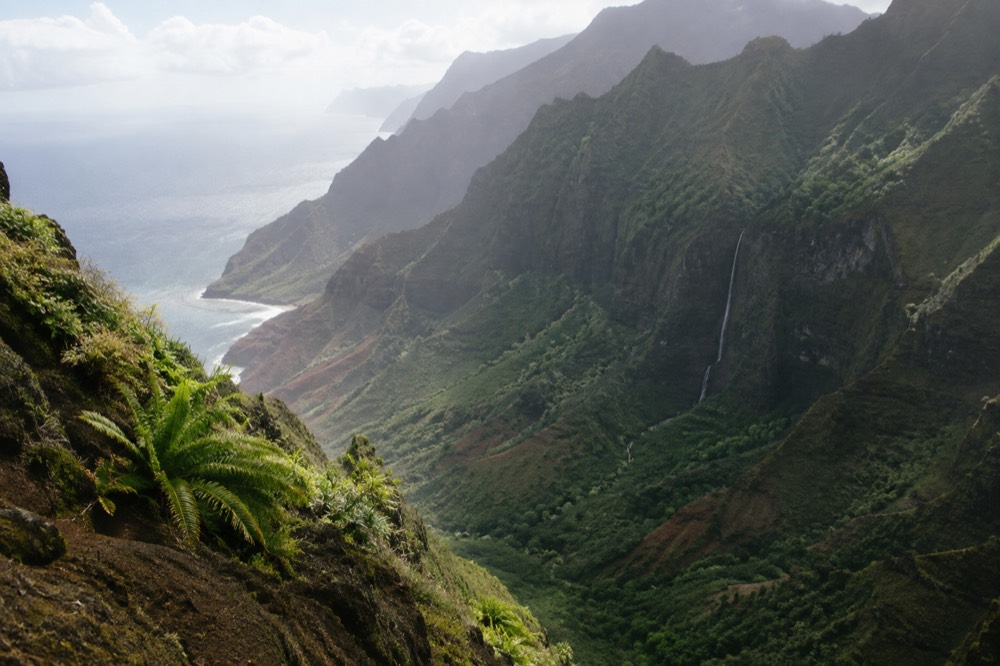
The published Kauai flights cluster tightly around the 45 to 55 minute mark. Blue Hawaiian's two Kauai products are 45 and 50 minutes. Those are total flight times, not Napali times: the standard circuit covers Waimea Canyon, the Na Pali cliffs, Hanalei and the wettest interior valleys in one loop, so the coastline you came for gets a pass of a few minutes while the camera is still warming up.
Boat time is a different order of magnitude. On this roster the shortest Napali product is a 3-hour Zodiac sea caves trip from Kikiaola, the longest is an 8-hour Niihau crossing, and the workhorse format is 5 hours: the Amelia K runs 5 hours from Port Allen, the Napali Navigators catamaran runs 5 hours, and the Kauai Sea Tours raft runs 5 and a half. In those five hours you get a snorkel stop, a meal, sea cave runs when conditions allow and a slow pass down all 16 miles of coast.
The honest way to frame it: a helicopter is a highlight reel and a boat is the full film. Some travellers want the highlight reel. But if your mental picture of the day is lingering at the base of a 4,000-foot cliff, the flight's runtime is its biggest hidden disadvantage.
What Does It Cost Against A Boat?
A helicopter tour of Kauai starts at roughly $309 to $499 per person for under an hour. Napali Coast boat tours on this roster run from $190 to $361.31 per person for 3 to 8 hours, most with a meal included. Per hour on the water or in the air, the boat costs a fraction of the flight, and the flight adds no meal, no snorkelling and no sea cave entry.
The price gap is widest at the entry level. The cheapest boat on this roster, the Express Na Pali Sunset Tour aboard 'Imiloa, starts at $190 per person for a 5-hour sunset trip with late lunch included. The cheapest helicopter seat advertised for Kauai starts around $309, and that figure comes from an aggregator listing rather than the operator's own page, so treat it as the floor of the range rather than a promise.
| Experience | Starting price per person | Duration | Meal included | Snorkelling |
|---|---|---|---|---|
| Kauai helicopter tour (Blue Hawaiian, 50 min) | $409 | 50 minutes | No | No |
| Kauai helicopter tour (Blue Hawaiian, 45 min) | $499 | 45 minutes | No | No |
| Amelia K power catamaran, Port Allen | $227.13 | 5 hours | Lunch | Yes, conditions permitting |
| Deluxe sunset cruise aboard Lucky Lady | $222.86 | 5 hours | Buffet dinner | No |
| Zodiac raft expedition, Kikiaola | $255 | 4 hours | Snacks | Yes, conditions permitting |
| Express sunset aboard 'Imiloa | $190 | 5 hours | Late lunch | No |
Note what the boat rows carry that the flight rows cannot: a meal, a snorkel stop, and in the raft's case, entry into the sea caves when the swell allows, something no aircraft does in any conditions. The helicopter's advantage is the aerial view of the interior valleys and Waimea Canyon, terrain a boat cannot reach. You are not choosing between two versions of the same product; you are choosing between two different products that happen to share one coastline.
There is a tax wrinkle worth knowing either way. The County of Kauai imposes a 0.5% surcharge on the 4% state General Excise Tax, an effective combined 4.5% on most retail and service transactions, and published tour prices do not always include it. Budget a few dollars per head above the sticker on either a flight or a boat.
If the price per hour is what decides it for you, the Amelia K is the strongest value on the roster: 5 hours, lunch, snorkelling and a sunset return, from $227.13, rated 4.9 from 2050 reviews.
How Often Is It Cancelled?
Helicopter tours cancel more often than boat tours because aircraft fly under visual rules: low cloud, rain or wind grounds them outright, while boats sail in light rain and only cancel for genuine swell or wind. No operator on either side publishes a cancellation rate, so the honest answer compares the rules, not invented percentages.
The regulatory frame for flights is strict. Hawaii air tours operate under 14 CFR Part 136 Subpart D, which sets a standard minimum altitude of 1,500 feet above the surface except for takeoff, landing or air traffic clearance, and the same rules now require single-engine rotorcraft on Hawaii air tours beyond the shoreline to carry approved flotation gear for each occupant, with a passenger briefing on water ditching and emergency egress. Those are good rules. They also mean the aircraft is committed to visual conditions and a fixed altitude band, and when the clouds sit on the cliffs, the flight does not go.
The boat side is more forgiving than people expect. Operators on this coast say in writing that light rain does not stop a tour, that rain on land is common while conditions out on the water stay clear, and that cancellations come from wind and swell rather than weather you can see from the hotel. When a boat trip does cancel, the standard offer is a reschedule or a full refund, and booking early in your stay leaves room to rebook.
The practical asymmetry matters for trip planning. A grounded flight day is usually a total loss of the activity because seats are scarce and the weather window may not reopen before you fly home. A cancelled boat morning is usually rebookable the next day, and every tour on this roster carries free cancellation. If your Kauai stay is short, cancellation risk is a real disadvantage of the air option, not a theoretical one.
Is Motion Sickness Worse In The Air?
Helicopter motion sickness is common and different from seasickness: the aircraft banks hard, has no horizon reference in the back seats and cannot stop mid-air, while a boat can slow down, change heading or shelter behind the coast. Neither is guaranteed comfortable, but the boat has more tools to manage a queasy guest.
The flight has three specific problems. First, the standard Kauai circuit banks and turns constantly to frame the terrain, and the back seats move through a wider arc than the front. Second, the doors stay on for most tours, so the view is framed through windows and the horizon flickers rather than sits still. Third, an airborne aircraft cannot pause: if you feel ill at minute ten, you have forty more minutes of it, and motion sickness medication taken at the airport may not have kicked in yet.
The boat side is not automatically calm. The crossing from Port Allen to the Napali Coast crosses open water, and swell is real. But the crew has options the pilot does not: the boat can slow down, change heading to take the swell on a different angle, or skip a cave run and head for sheltered water. On medication timing the published data is precise: oral meclizine and dimenhydrinate take about 2 hours to reach effect and last around 8 hours, while a scopolamine patch needs at least 4 hours before it works and delivers roughly 3 days of coverage. Either way, dose before check-in, not after the first queasy minute, on water or in air.
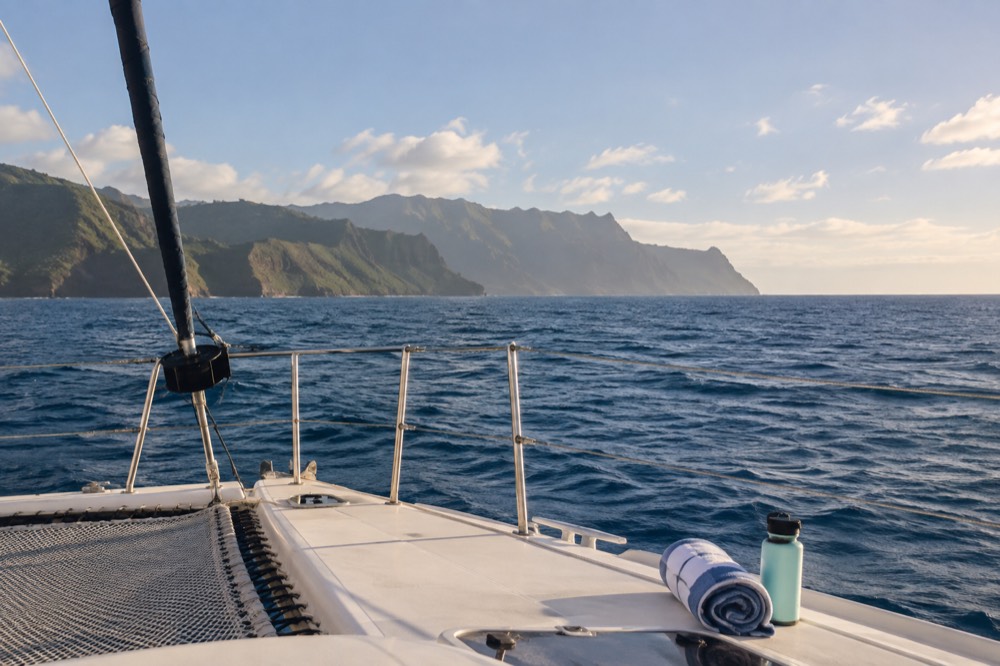
The honest tiebreaker is recovery. A seasick guest on a boat gets fresh air, a horizon to fix on and a crew that has seen it a thousand times. A motion-sick guest in a helicopter gets a bag and the remaining circuit. If you know you are prone, that difference alone should decide the day.
What About Noise And Seating?
Helicopter tours are loud enough to require headsets for the whole flight, seats are assigned by weight rather than choice, and most tours keep the doors on, so photography happens through window glass. A boat is open-air, quiet enough for conversation and lets you move around the deck, which is why families and photographers often prefer it.
The noise is not a minor irritant. Passengers wear aviation headsets for the entire flight, the pilot narrates through them, and conversation between guests is limited to what the intercom allows. On a boat the loudest thing is usually the wind and the engines at cruise, and the crew narrates over a speaker system while you walk the deck, sit at the bow or shelter in the cabin. If your idea of the tour includes actually talking to the people you travelled with, this is a bigger disadvantage than it sounds.
Seating is the second structural frustration. Helicopter operators balance the aircraft by weight, so seats are assigned at check-in and the coveted front seats go to a lucky pair, not to whoever booked first. On a boat, everyone gets a view: the catamarans on this roster carry up to 49 guests with open deck space, and the small rafts cap at 14 for exactly the opposite reason, intimacy rather than capacity.
Photography is the third. Doors-on flights shoot through plexiglass, which adds reflections and softens detail on the very cliffs you paid to capture. Boat photography happens in open air at water level, where the cliffs fill the frame and the sea caves are close enough to touch with the lens. The aerial shot is a different picture, not a better one, and the window glass is a real cost.
Can Children Fly?
Helicopter operators commonly set minimum ages, and one major Kauai boat operator publishes a minimum age of 5 with health restrictions for pregnancy and back or neck problems, while raft operators restrict pregnancy and back conditions outright. Neither option takes infants comfortably, but family groups generally find boats more workable than aircraft.
On the air side, minimum ages and lap-child rules vary by operator and are set at booking, so check the live listing for the specific flight before promising a child a seat. The constraints are physical: headsets must fit, the briefing must be understood and the seating balance must work. Young children who cannot keep a headset on are usually excluded outright.
The boat side publishes its policies, and they are instructive even for flight comparison. Holo Holo Charters states a minimum age of 5 and notes its tours are not suitable for pregnant women, people with back or neck problems, recent surgeries or wheelchair users. Na Pali Riders states it cannot accommodate pregnant women or anyone with back or neck problems on its Zodiac raft tours. Those same categories are the ones helicopters restrict most tightly, so if your group includes any of them, read both listings closely before choosing.
The practical family picture favours the larger catamarans. A 5-hour trip with a served lunch, a cabin for shade and a bathroom on board absorbs a restless child far better than 50 minutes of headset-clamped sitting. The rafts, by contrast, are the boat world's equivalent of the helicopter's restrictions: small, fast and not for everyone. If you are weighing the flight because a raft felt too intense for your family, the middle option is the power catamaran, not the aircraft.
What Does A Boat Do Better?
A boat gets you water level to the cliffs, inside the sea caves when conditions allow, into the water with a snorkel, fed a full meal and out on the coast for hours rather than minutes, all from $190 to $361.31 per person with free cancellation. A helicopter gets you the aerial overview, the interior valleys and Waimea Canyon, and nothing else on that list.
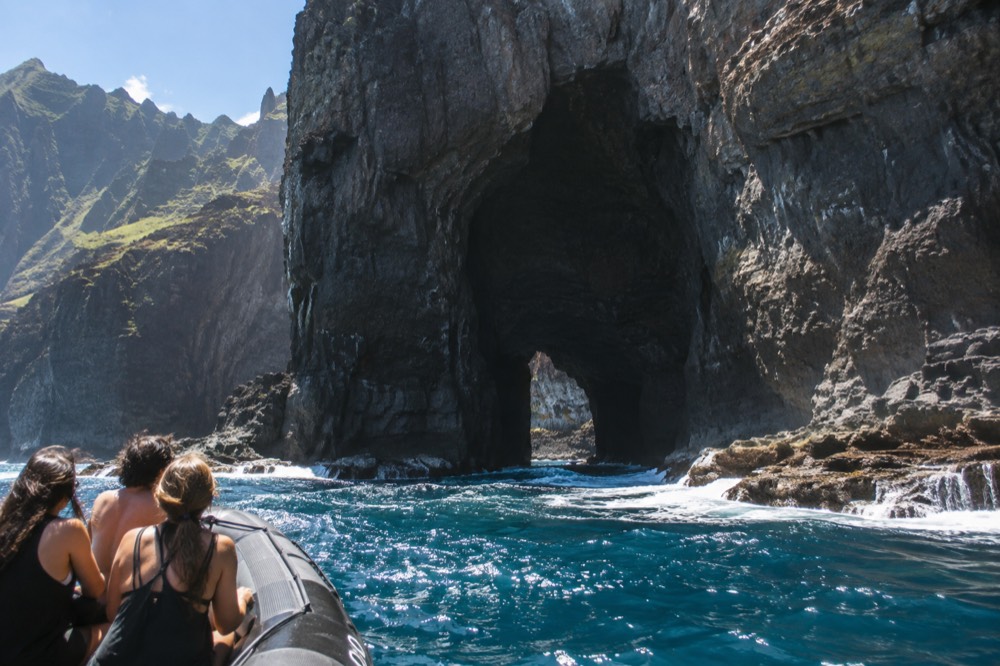
Water level is the thing no flight can replicate. The Napali cliffs rise up to 4,000 feet from the sea, and from a boat deck they tower; from 1,500 feet above the surface, the same cliffs read as a map. The sea caves are the sharpest example: rigid-hull rafts enter them when the swell allows, catamarans get close, and helicopters pass over at altitude. Cave entry is never guaranteed and always at the captain's discretion, but on a raft it is at least possible, and on a flight it is never on the menu.
Snorkelling is the second. Several tours on this roster stop in the water for 30 to 60 minutes at a captain-chosen spot, gear included. The water sits around 74 to 80 degrees year round. No aircraft offers any of this, and the marine life, turtles, reef fish and the occasional monk seal at a respectful distance, lives at water level, not at altitude.
Time and value are the third. Five hours on the Amelia K, with lunch, snorkelling and a sunset return, costs from $227.13, and the tour carries a 4.9 rating from 2050 reviews. The Deluxe Na Pali Sunset Cruise aboard Lucky Lady costs from $222.86 for a 5-hour buffet dinner cruise rated 4.7 from 1610 reviews. Against a $409 to $499 flight of under an hour, the boat is not the budget option that compromises on the coast; it is the option that spends the whole day on it. For the fuller cost breakdown, see how much a Napali Coast boat tour costs, and for the head-to-head framing, helicopter or boat for the Napali Coast covers the case for flying too.
If the raft version of the water-level day appeals, the Zodiac raft expedition from Kikiaola runs 4 hours with snacks and snorkelling from $255, rated 4.9 from 956 reviews.
The fair closing note is that the flight is not a scam or a bad product. The aerial view of Waimea Canyon and the interior valleys is genuinely unobtainable from a boat, and many travellers do both in one week. The disadvantage is not that helicopters are bad; it is that for the Napali Coast specifically, the thing most visitors picture, the cliffs, the caves, the water, the boat delivers more of it, for longer, for less. This site, Napali Coast Boat Tours, books the water side of that sentence, and every tour linked here is real, bookable and free to cancel. For the wider choice, start with the best Napali Coast boat tour and work outward from there.
Common Questions About Helicopter Tour Disadvantages On Kauai
What Are The Disadvantages Of A Helicopter Tour?
The main disadvantages are cost, brevity, cancellation risk, noise, assigned seating and motion sickness. A Kauai flight runs 45 to 55 minutes and starts around $309 to $499 per person, seats are assigned by weight, everyone wears headsets, and low cloud or wind grounds the aircraft entirely, with no reschedule guarantee. A boat tour of the same coast runs 3 to 8 hours, costs from $190 to $361.31 per person, includes a meal on most trips and carries free cancellation.
How Short Is The Flight?
Most Kauai helicopter tours run 45 to 55 minutes total, and the Napali Coast segment of the standard circuit is only a few minutes of that, because the flight also covers Waimea Canyon, the interior valleys and the north shore. Boat tours of the same coast run 3 to 8 hours, with the 5-hour format the most common on this roster.
What Does A Helicopter Tour Cost Compared With A Boat?
Published Kauai helicopter prices run from $409 for a 50-minute tour to $499 for a 45-minute tour. Napali Coast boat tours run from $190 to $361.31 per person for 3 to 8 hours, most with a meal and many with snorkelling included. Per hour of viewing, the boat costs a fraction of the flight.
Is A Helicopter Or A Boat More Likely To Be Cancelled?
Helicopters cancel more often, because they fly under visual rules and low cloud, rain or wind grounds them outright. Boats run in light rain and cancel mainly for swell and wind, and every tour on this roster offers a reschedule or full refund, so a lost morning is usually rebookable the next day.
Is Motion Sickness Worse In A Helicopter Or A Boat?
Both can trigger it, but a helicopter cannot stop or slow for a queasy passenger, while a boat can change heading, slow down or shelter behind the coast. Either way, dose motion sickness medication before check-in: oral tablets need about 2 hours, a scopolamine patch at least 4 hours.
Can You See The Sea Caves From A Helicopter?
You can see the cave openings from the air at a distance, but you cannot enter them. Cave entry is a raft experience at water level, and even then it is conditions permitting and at the captain's discretion, never guaranteed. No aircraft offers cave entry in any season.