What Is The Best Month To See Whales In Kauai?
January and February are the strongest whale months on Kauai, inside an official November to April humpback season. Here is how the winter sea state, the tour roster and the harbors shape which trip to book.
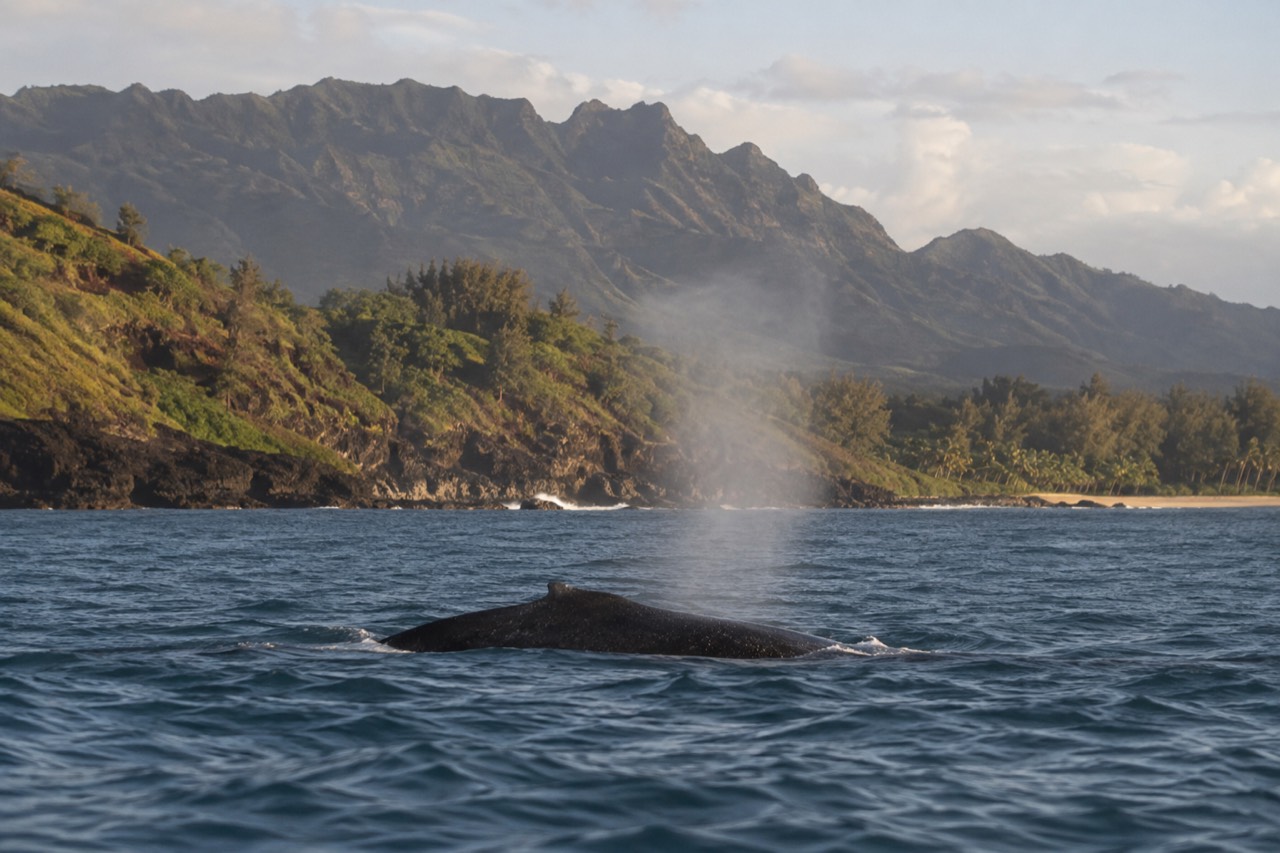
What Is The Best Month To See Whales In Kauai?
Kauai's humpback whales show up on a schedule that has almost nothing to do with the tourist calendar. The Hawaiian Islands Humpback Whale National Marine Sanctuary puts the official viewing window at November through April, and the animals themselves concentrate most densely around January and February. Those are also, by pure coincidence of oceanography, two of the roughest months on the water off Kauai. The whales and the big northwest swells arrive together, and any honest answer about the best month has to hold both facts at once.
One thing worth saying up front, because it matters: there is no dedicated whale-watch tour on Kauai's west side, and none is needed to see whales. None of the 26 bookable tours here is sold as a whale-watching trip. What the roster does contain is a set of year-round boat tours, all departing Port Allen or Kikiaola on the west side, and whales are a common sight from those decks all winter. That is the honest framing, and the rest of this page works inside it.
When Is The Best Month For Whales On Kauai?
January and February are the two best months to see whales on Kauai. The official season runs November through April, but sightings concentrate hard in the middle, and one operator on the coast states plainly that the most sightings usually occur in January and February. If you can only pick one month, pick February: peak whale density, slightly calmer seas than January, and the same year-round tours running from the west-side harbors.
The reason the middle of the season is the sweet spot is migration timing. Humpbacks travel to Hawaii to mate and calve, and the population in Hawaiian waters builds through December, holds through the heart of winter, then thins out as animals head back toward feeding grounds in the North Pacific. A visitor arriving in late December has a real chance of sightings. A visitor arriving in late March has a diminishing one.
The second half of the answer is about where you stand while looking. Kauai's whale watching is not confined to boats. Shore spotting from the west and south sides works well in winter, and the sanctuary's community counts are run entirely from shore stations. But the question this page answers is about the boat trip, and the boat trip in winter is a different product from the summer one: shorter days, bigger swell, more weather calls, and a roster that leans on sightseeing and sunset runs rather than all-day snorkel expeditions.
Here is the month-by-month picture, combining the official sanctuary window with the winter sea state recorded by the Hanalei wave buoy over two recent years. The buoy sits off the north shore in deep water, so its numbers describe offshore sea state, not what it feels like on the deck.
| Month | Whales | Offshore sea state | What it means for a tour |
|---|---|---|---|
| November | First arrivals, thin | Rough: 42.6% of buoy observations at or above 2.5 m | Possible, weather-dependent, book early in your stay |
| December | Building fast | Rough: 46.4% of observations at or above 2.5 m | Good whale odds, real cancellation risk |
| January | Peak density | The roughest: 52.2% at or above 2.5 m | Best whales, hardest sea, expect route flexibility |
| February | Peak density | Rough but easing: 47.5% at or above 2.5 m | The best single month, if the sea allows |
| March | Strong, thinning | Moderate: 28.3% at or above 2.5 m | A strong compromise month |
| April | Stragglers, mostly gone | Moderate: 16.3% at or above 2.5 m | Calmer water, few whales left |
| May to October | Effectively none | Calm season, near-zero rough observations | Book for caves, snorkel and cliffs instead |
The pattern to read out of that table is the central tension of a Kauai winter trip: the two best whale months are the two most weather-exposed months. Every operator on the coast handles this the same way, by selling conditions-permitting tours with free cancellation and asking guests to book early in their stay so there is room to reschedule.
When Does Humpback Season Run?
The official season is November through April, per the Hawaiian Islands Humpback Whale National Marine Sanctuary. Kauai's boat operators sell their commercial whale windows inside that, typically December through March. The animals do not read either calendar: the first arrivals show in November, the population peaks mid-winter, and the last individuals linger into April before the season effectively closes.
The sanctuary's own statement is that every winter, thousands of humpbacks travel to Hawaii's warm, shallow waters to mate, give birth and raise their young, and that from November through April visitors can see whales. That is the federal baseline, and it is worth reading directly rather than through a travel-site paraphrase: the sanctuary's own season page states the window plainly.
Operators are more conservative, because they are the ones standing on a deck in January making a call about whether the channel is workable. Their commercial whale products, where they exist on Kauai, run roughly December through March. That narrower window reflects two things: the animals are genuinely most numerous then, and the sea state is genuinely at its worst then, so a product sold in that window has to be built to flex.
One geographic fact does a lot of quiet work here and is worth knowing. The sanctuary's Kauai unit is on the north shore, running from Kailiu Point east to Mokolea Point, which is the Hanalei-to-Kilauea stretch. The Napali Coast itself lies west of that line and outside the sanctuary boundary. The federal approach rules still apply everywhere, but the sanctuary's counted sightings and shore stations are largely a north-shore phenomenon, while the boat tours on this roster all depart the west side.
If a winter whale sighting is the goal, the tours below are the realistic candidates from this roster: year-round departures from Port Allen and Kikiaola that spend real time on the open water where the whales are.
When Is The Peak?
The peak is January and February, when humpback density in Hawaiian waters is at its maximum and community counts record their highest numbers. The 2026 Sanctuary Ocean Count on February 28 logged 1,935 whale sightings across 46 shore stations statewide, with 337 of those on Kauai alone. February is the single month where the whale odds and the bookable tour calendar overlap best.
The community count data is the freshest hard evidence available. Across the three coordinated count days in the 2026 season, more than 1,200 volunteers observed 4,325 humpback whales in total, and the February 28 event was the strongest single day. Kauai's 337 sightings that day came from its own shore stations, which tells you the animals were close enough to count from land, not just from a boat.
Peak density has a practical texture, too. Mid-winter whales on Kauai are not a distant possibility; they are breaches, tail slaps and mother-and-calf pairs close enough that shore spotters with binoculars can census them. A winter sunset sail out of Port Allen crosses open water where those animals are actively working, and crews on regular sightseeing tours call out sightings as they happen rather than routing to them.
The honest caveat that belongs beside the peak: the same two months that maximize whales maximize swell. Booking a January or February tour means accepting a real chance the captain adjusts the route, shortens the trip or reschedules you. Every tour on this roster carries free cancellation, and the standard advice from operators themselves is to book early in your stay, so a blown day leaves room for another.
Which Boat Tours See Them?
Any winter departure from Port Allen or Kikiaola can produce whale sightings, because humpbacks work the open water along Kauai's west and south sides all season. This site's roster has no dedicated whale-watch tour, so the play is a year-round sightseeing or sunset tour with good open-water time. The Leila sunset dinner sail, the Amelia K five-hour tour and the express sunset runs are the natural candidates.
Being straight about the gap: if you came here looking for a whale-watching tour to book, this site does not sell one. What it sells is 26 boat tours, every one of them a year-round, conditions-permitting product departing the west side, and whales are a routine winter bonus on all of them. A tour that spends an hour crossing open water between the harbor and the cliffs gives the animals the best chance to find you.
The Leila Na Pali Sunset Dinner Sail is a good example of the format. It is a sailing catamaran out of Port Allen, 4 to 5 hours, dinner included, rated 4.7 from 609 reviews, from $263.82 per person, and it runs year round, conditions permitting. A winter departure puts you on the channel in the hour before dusk, which is when whale activity near boats tends to be visible and the sea is often at its calmest point of the day. For readers weighing timing against the sea, the question of morning or afternoon on a Napali boat tour interacts with whale odds, since winter mornings are frequently the rougher window.
The Amelia K takes the other approach: a five-hour power catamaran tour with lunch included, rated 4.9 from 2050 reviews, from $227.13 per person, also out of Port Allen. More time on the water is more whale exposure, and the catamaran platform is the steadier ride in a winter swell, which matters if anyone in your group is worried about seasickness on a Napali boat tour.
Federal law sets the boundary of every whale encounter, and it is worth knowing the number. Under 50 CFR 216.19, it is unlawful to approach within 100 yards of a humpback whale by any means, or to disrupt its normal behavior. Licensed captains hold to that line, so a sighting means the boat holds position or slows and the whales decide how close the encounter gets.
Here is how the realistic winter candidates from the roster compare.
| Tour | Boat type | Duration | From (per person) | Rating | Meal |
|---|---|---|---|---|---|
| Leila Sunset Dinner Sail | Sailing catamaran | 4 to 5 hours | $263.82 | 4.7 from 609 reviews | Dinner included |
| Amelia K 5-Hour Tour | Power catamaran | 5 hours | $227.13 | 4.9 from 2050 reviews | Lunch included |
| Express Sunset aboard 'Imiloa | Power catamaran | 5 hours | $190 | 4.5 from 224 reviews | Late lunch included |
| Deluxe Sunset aboard Lucky Lady | Power catamaran | 5 hours | $222.86 | 4.7 from 1610 reviews | Buffet dinner included |
| Sunset & Sightsee (Holo Holo) | Power catamaran | 3 to 4 hours | $263.82 | 4.7 from 1249 reviews | Dinner included |
All five depart Port Allen, all carry free cancellation, and all run year round, conditions permitting. The differences that matter in winter are duration, platform stability and what is served on board, not whale odds, which are roughly the same across the set.
Is The Winter Sea Too Rough?
Sometimes, yes, and January is the roughest month. The Hanalei buoy recorded at least 2.5 m significant wave height in 52.2% of January observations over two recent years, against near-zero rough readings in summer. But the west-side harbors sit leeward of the worst of it, operators run year round by design, and every tour carries free cancellation, so a rough day is a reschedule, not a lost trip.
The buoy numbers deserve their plain reading. They describe offshore sea state in deep water off the north shore, not breaker height at the cliff line and not what the deck feels like. Even so, the seasonal shape is unmistakable: June through September the buoy essentially never reads 2.5 m or above, while December and January read that high about half the time. April and October are the real shoulders, not May and September, a detail most travel writing gets wrong by applying the kayak season to motor boats.
The National Weather Service makes the winter call in concrete terms, issuing High Surf Advisories for Kauai's west-facing shores at 12 feet and Warnings at 20 feet. Those thresholds, not a calendar date, are what a captain is weighing when the morning of your tour arrives. Operators on the coast are consistent about what actually cancels a trip: wind and swell, not rain. Light rain on land while the water is clear offshore is a normal Kauai morning.
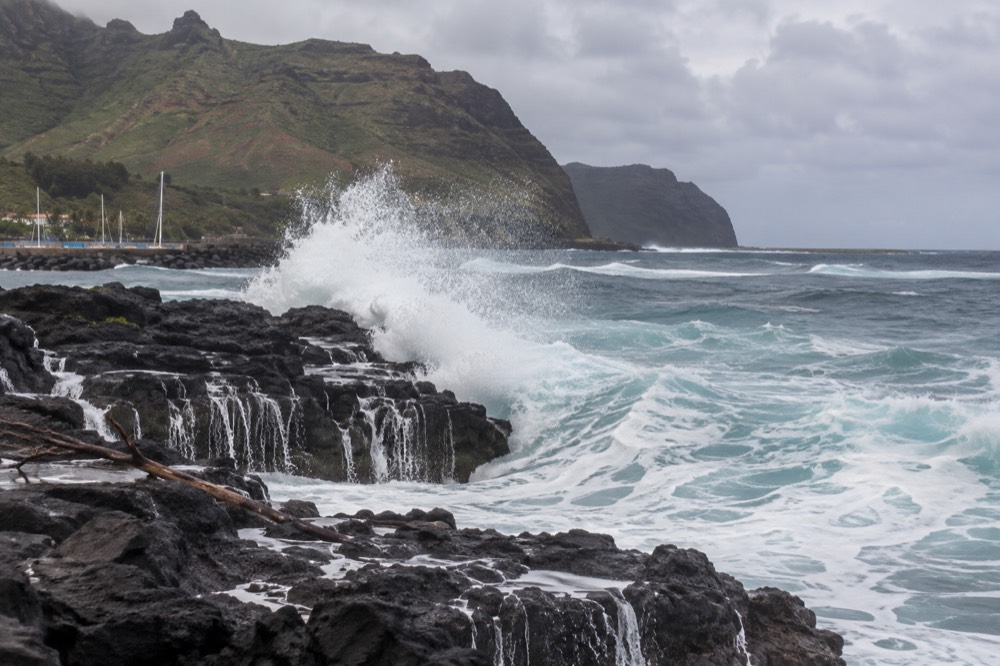
For a winter visitor, the practical translation is this. Book the tour. Book it early in your stay, not on your last day. Expect the possibility of a route adjustment or a reschedule, and treat free cancellation as the insurance it is. The visitors who lose a whale day to weather are almost always the ones who booked the final afternoon of a week-long trip.
Does Whale Season Close The Caves?
No. Whale season and cave access are governed by different things entirely. Caves are swell-dependent, at the captain's discretion on the day, and no operator guarantees entry in any month. Winter's larger ground swells simply make entry less likely than in summer, so a January tour may see whales and skip the caves, while an August tour does the reverse.
The distinction matters because a lot of winter planning advice flattens it. There is no regulated boat season on the Napali Coast, and there is no cave season either. What exists is a set of conditions-permitting products: sea cave approaches and snorkel stops happen when the swell allows, and the operators state this in writing rather than promising it. The rigid-hull rafts are the vessels that get inside the caves when conditions permit; the larger catamarans get close but stay outside.
The winter trade-off is real, though. Ground swell size, not time of day, governs cave entry, and winter months carry more of it. A February raft tour has a genuine chance of both whales and caves on the same departure, but the cave part is the one more likely to be dropped. If caves are the priority and whales are the bonus, March is the better winter month: strong whale presence still, with the sea beginning to settle.
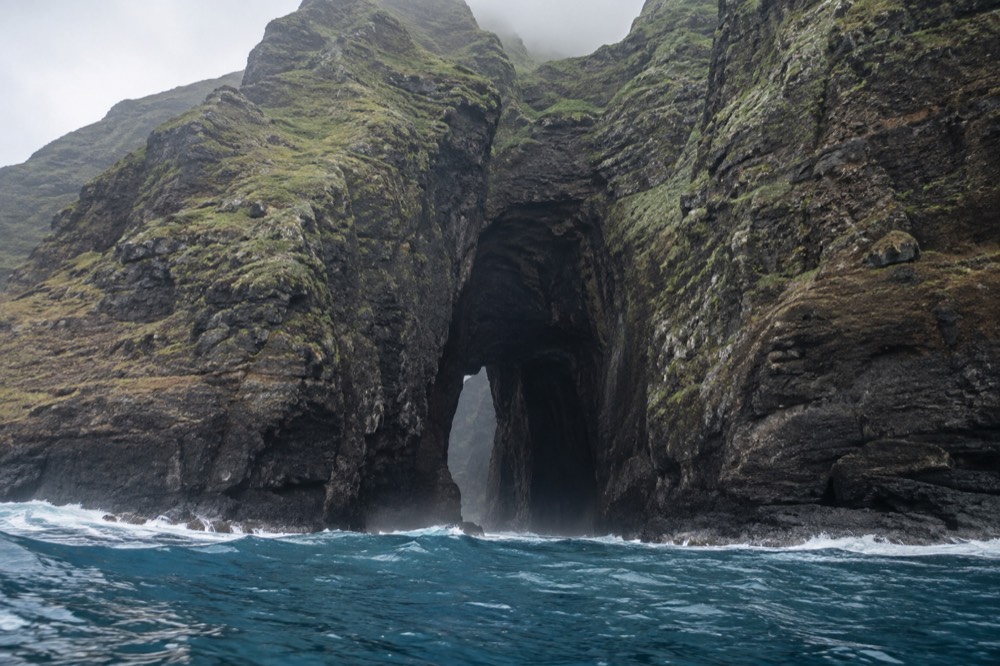
Snorkel stops follow the same logic. Winter tours that include snorkeling sell it as conditions-permitting, and on rough days the captain drops the stop and runs the sightseeing. That is a normal winter outcome, not a failure of the tour, and it is why the winter products on this roster lean toward sightseeing and sunset formats with meals included, which deliver a full experience even when the water activities come off the itinerary.
Which Harbor Runs In Winter?
Both of them. All 26 tours on this roster depart Port Allen, with 18 departures, or Kikiaola near Waimea and Kekaha, with 8, and both west-side harbors host year-round operations, conditions permitting. There is no winter harbor closure and no north-shore departure on this roster at all; if you are staying on the north shore, the honest answer is that you drive west.
The west-side departure is not a limitation in winter, it is the whole point. The leeward southwest corner of Kauai is the protected side when northwest swells run, which is exactly why the year-round operators base there. Port Allen in Ele'ele is the larger operation, with the office row at the marina center where check-in happens before anyone walks to a dock. Kikiaola, two miles west of the Waimea River mouth, is the smaller, shallower harbor that hosts the raft fleet.
One practical difference between the harbors is worth a sentence. Parking at Port Allen is free, first-come in a gravel lot. Parking at Kikiaola went paid in mid-2025, run by a third party, with rates posted at the harbor and free parking for Hawaii residents with a state ID. The site behind this page, Napali Coast Boat Tours, lists every departure's harbor on the tour card, and booking the raft while driving to Port Allen is the classic first-timer error, since the two harbors sit about twelve kilometers apart.
The drive time question answers itself once you know the geography. From the Poipu area, Port Allen is a short hop. From Princeville or Hanalei, budget close to ninety minutes each way, which is one more reason the standard advice is to book a morning tour and to book it early in your stay. For readers mapping the whole island against the harbors, the north shore versus west side boat tour comparison breaks down the trade-offs in detail.
Which Winter Tour Should You Book?
Book a year-round sunset or sightseeing tour out of Port Allen, in late January or February, early in your stay. The Amelia K five-hour tour, at 4.9 from 2050 reviews and from $227.13 per person, is the strongest all-round winter pick for whale exposure because it maximizes time on the water. Pair it with a free-cancellation booking so a weather day becomes a reschedule rather than a loss.
The logic is simple. Whales are a function of time on open water in the right months, and the Amelia K delivers more of it than almost anything else on the roster, with a stable catamaran platform and lunch included so the trip is complete even if the sea keeps the boat at a distance from the cliffs. At 4.9 from 2050 reviews it also has the deepest review pool on this site, which in winter, when product mix and conditions vary, is worth more than a perfect score from a handful of bookings.
If the plan is a shorter day or a tighter budget, the Express Na Pali Sunset Tour aboard 'Imiloa is the roster's price floor at $190 per person, 5 hours with a late lunch included, rated 4.5 from 224 reviews, capped at 36 guests and running year round, conditions permitting. It is the same open-water crossing as its bigger siblings, so the whale odds travel with it.
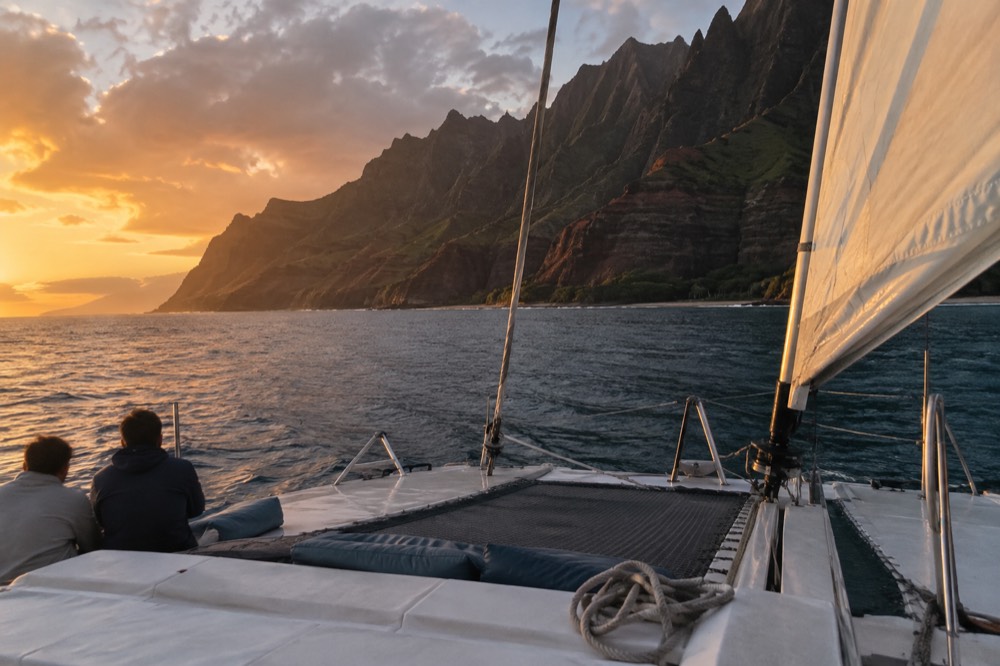
For a winter trip built around the whole evening rather than the whole day, the sunset dinner formats are the pick: Leila for the sailing experience and dinner, the Lucky Lady buffet sunset cruise at 4.7 from 1610 reviews and from $222.86 per person, or the Holo Holo sunset and sightsee run at 3 to 4 hours for a shorter commitment. Here is the winter decision in one grid.
| If your priority is... | Book this | Why |
|---|---|---|
| Maximum whale exposure | Amelia K, 5 hours | Most time on open water, stable platform, lunch included |
| Lowest price | Express Sunset aboard 'Imiloa, from $190 | Roster price floor, same crossing, late lunch included |
| A full evening out | Leila Sunset Dinner Sail | Sailing catamaran, dinner, dusk timing over whale water |
| Steadiest ride in swell | Amelia K or Lucky Lady | Power catamarans handle the winter sea best |
| Shortest commitment | Sunset & Sightsee, 3 to 4 hours | A compact window if your schedule is tight |
Whatever the pick, the winter booking rules are the same across the roster: free cancellation on every tour, check-in at the office row before the dock, and the captain's word final on the day's route. Book the first week of your stay, watch the forecast without panicking over rain, and let the whales do the rest.
Common Questions About Whale Season In Kauai
What Is The Best Month To See Whales In Kauai?
February, with January a close second. The official season runs November through April, but humpback density in Hawaiian waters peaks mid-winter, and the 2026 community count on February 28 recorded 337 Kauai sightings in a single morning from shore stations alone.
When Is The Best Month For Whales On Kauai?
January and February. These are the months when the population is at its densest and sightings are most consistent from both boats and shore. The trade-off is that they are also the roughest months offshore, so book early in your stay and use the free cancellation every tour carries.
When Does Humpback Season Run?
The official sanctuary window is November through April. Kauai operators run their commercial whale products inside that, roughly December through March, and the first arrivals typically show in November with stragglers into April.
Can You See Whales From A Regular Boat Tour?
Yes. Humpbacks work the open water along Kauai's west and south sides all winter, and year-round tours departing Port Allen and Kikiaola cross that water on every trip. This site sells no dedicated whale-watch tour, but sightings from regular sightseeing and sunset tours are a routine winter occurrence, always under the federal 100-yard approach limit.
Is The Winter Sea Too Rough For Boat Tours?
Sometimes, but not usually. The west-side harbors sit on the leeward coast, and operators run year round by design. Rough days mean a route adjustment or a reschedule, not a cancelled vacation, and light rain alone never stops a tour. January carries the highest weather risk of the whale months.
Do Winter Tours Still Enter The Sea Caves?
Sometimes. Cave entry is swell-dependent and at the captain's discretion in every month, and winter's larger ground swells make it less likely than in summer. A winter raft tour can deliver both whales and caves on a calm day, but no operator guarantees either.